KEY VERSE
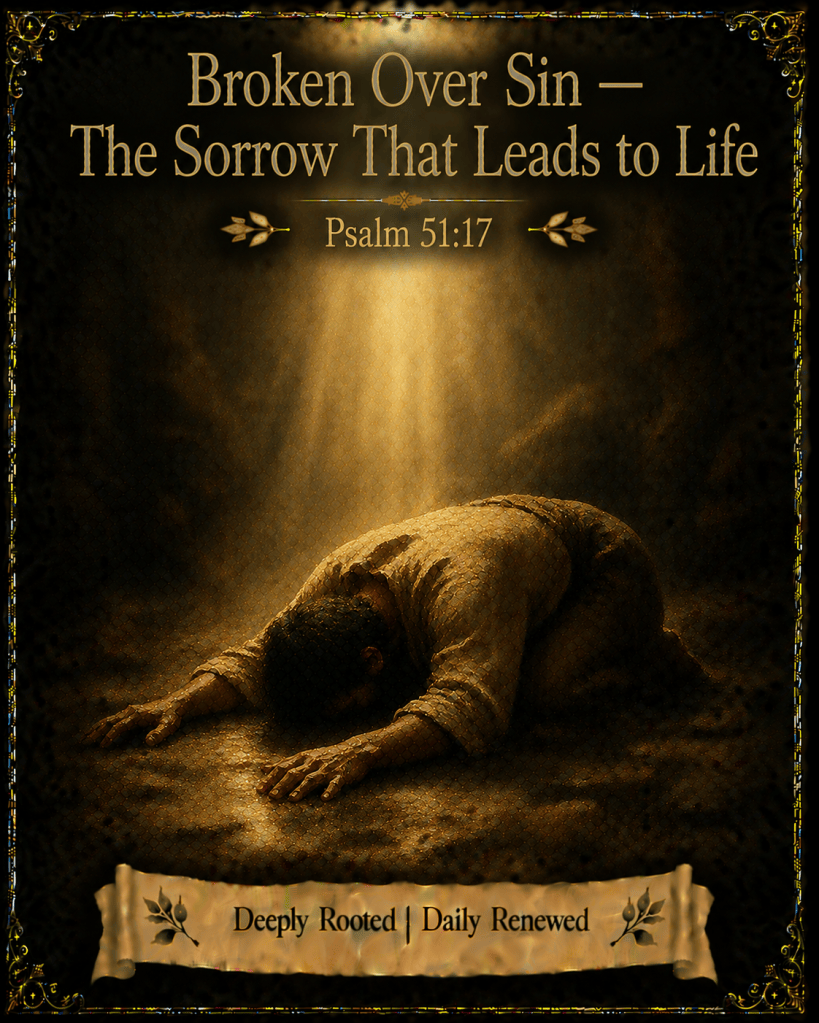
“My sacrifice, O God, is a broken spirit; a broken and contrite heart you, God, will not despise.”
— Psalm 51:17
ROOTED TRUTH
The grief that sin produces in a heart that loves God is not the same as shame. Shame collapses inward. Godly sorrow opens upward — toward the mercy that is always greater than the failure.
FAITH STORY
Psalm 51 was written by David after Nathan the prophet confronted him about his sin with Bathsheba.
It is the most fully realized prayer of repentance in all of Scripture — and it is unflinching in its honesty. David does not minimize, excuse, or contextualize. He names what he has done with full weight: I have sinned against You. Against You and You only. My sin is always before me. I was sinful from birth.
And then, in verse 17, he arrives at the insight that makes the whole psalm possible: the sacrifice God is looking for is not religious performance or ritual compensation. It is a broken and contrite heart. And that, David says with astonishment, God will not despise.
The word contrite means crushed, ground down, pulverized. It describes a spirit that has come to the end of its own resources and self-justifications. A heart that is not simply sorry it got caught, not merely sorry for the consequences, but genuinely broken over the breach between what was done and who God is.
This is what Paul called godly sorrow — the grief that produces repentance without regret, as opposed to worldly sorrow that leads only to death. Worldly sorrow is primarily focused on self — the shame, the embarrassment, the damage to reputation or relationship. Godly sorrow is primarily focused on God — the awareness of what sin does to the relationship, the genuine grief over having offended the One who is most worth loving.
The distinction matters enormously because they lead in different directions. Worldly sorrow collapses into shame and despair — Judas’s end. Godly sorrow opens into repentance and restoration — Peter’s end.
God does not despise the broken and contrite heart. He receives it. Every time. The very brokenness that feels like disqualification is, in God’s economy, the precise posture He honors.
Come broken. You will not be turned away.
SCRIPTURE FOR DEEPER ROOTS
Psalm 51 — David’s prayer of repentance.
2 Corinthians 7:10 — “Godly sorrow brings repentance that leads to salvation and leaves no regret.”
Isaiah 57:15 — “I live in a high and holy place, but also with the one who is contrite and lowly in spirit.”
DAILY PRACTICE
Read Psalm 51 slowly and in full today. As you read, ask the Holy Spirit to show you the difference between the shame you may carry and the godly sorrow He is inviting you toward. Shame says: I am too far gone. Godly sorrow says: I have done wrong and I want to come back. Bring one specific sin or pattern before God today — not in self-flagellation, but in honest, contrite repentance. Receive the promise of verse 17: a broken and contrite heart, God will not despise.
DAILY PRAYER
Father, I come to You with a broken spirit today — not performing brokenness, but genuinely grieved over the ways I have sinned against You and against others. I do not minimize what I have done. I do not justify it. I bring it to You as David brought his — fully, honestly, without excuse. Receive my contrite heart. Create in me a clean heart. Restore to me the joy of Your salvation. I know You will not despise what I am bringing. Amen.
DEEP REFLECTION
1. What is the difference between godly sorrow and shame — between grief that leads to repentance and grief that leads to collapse? How do you tell which one you are experiencing?
2. David said against You and You only have I sinned — directing his repentance primarily toward God rather than focusing on his own reputation. What does that orientation reveal about what genuine repentance is really about?
3. God says He lives in a high and holy place but also with the one who is contrite and lowly in spirit. What does it tell you about God’s character that the posture He most honors is brokenness rather than strength or achievement?
#DeeplyRooted#DailyRenewed Devotions for a Grounded and Growing Faith


Leave a Reply