Category: Uncategorized

  • Wednesday, August 5, 2026–Who God Is — The Character of God: God Is Love

    KEY VERSE

    “Whoever does not love does not know God, because God is love.”

    — 1 John 4:8


    ROOTED TRUTH

    God does not merely feel love or act lovingly — He is love. Love is not something God does as an expression of His character; it is the very nature of who He is.


    FAITH STORY

    1 John 4:8 is one of the most extraordinary statements in all of Scripture.

    Not God is loving — though He is. Not God loves — though He does. God is love. The statement is ontological — it is about what God is at the level of His being, not merely what He does at the level of His behavior.

    This matters enormously. If God merely felt love or acted lovingly, then love would be a quality He possessed — something He could increase or decrease, extend or withhold depending on circumstances. But if God is love, then love is not something He has. It is something He is. It cannot be separated from Him any more than heat can be separated from fire.

    John goes on to describe what this love looks like in action: this is how God showed his love among us — He sent his one and only Son into the world that we might live through him. This is love: not that we loved God, but that he loved us and sent his Son as an atoning sacrifice for our sins.

    The initiative is always God’s. The love that defines Him moved first — not in response to our worthiness or our love for Him, but out of the sheer overflow of what He is. He loved before we knew He existed. He moved toward us before we turned toward Him. He gave His Son for people who were still His enemies.

    This is why John concludes: we love because he first loved us. Our capacity to love — anyone, in any situation — is derivative. It flows from a source that is not us. We are not the origin of love. We are channels of the love that originates in a God whose very nature is love.

    When love is hard — when the person in front of you is unlovable, when the feeling isn’t there, when the cost is high — return to this: love is not primarily something you generate. It is something you receive from a God who is its source and share from what you have been given.

    You are loved by Love itself. Let that change how you love.


    SCRIPTURE FOR DEEPER ROOTS

    1 John 4:7–21 — God is love.

    Romans 5:8 — “While we were still sinners, Christ died for us.”

    Ephesians 3:17–19 — “I pray that you…may grasp how wide and long and high and deep is the love of Christ.”


    DAILY PRACTICE

    Sit quietly today with this truth: God is love — and that love is directed personally at you. Not at humanity in general, not at the church collectively, but at you specifically. Spend five minutes receiving that love rather than doing anything with it — no tasks, no requests, no intercession. Just receive. Then ask God to show you one person today who needs to receive the love of God through you — and be the channel.


    DAILY PRAYER

    Father, You are not just loving — You are love itself. That love came to me before I could earn it, before I knew I needed it, before I could offer anything in return. I receive it today — not as a concept but as a reality. And I ask that the love I have received would flow through me to someone else today in a way that points back to You, the source. Let me love because You first loved me. Amen.


    DEEP REFLECTION

    1.  The statement God is love is ontological — it describes what God is, not just what He does. How does understanding love as God’s nature rather than God’s behavior change the way you relate to Him and to others?

    2.  John says we love because He first loved us — our love is always derivative, always a response to what we have received. How does that change the way you approach the command to love difficult people? Does it relieve pressure or add a different kind of responsibility?

    3.  Ephesians 3 prays that we would grasp how wide, long, high, and deep the love of Christ is — implying it exceeds our current comprehension. What dimension of God’s love do you most need to understand more fully right now?


    #DeeplyRooted#DailyRenewed Devotions for a Grounded and Growing Faith

  • Tuesday, August 4, 2026–Who God Is — The Character of God: God Is Faithful

    KEY VERSE

    “Because of the LORD’s great love we are not consumed, for his compassions never fail. They are new every morning; great is your faithfulness.”

    — Lamentations 3:22–23


    ROOTED TRUTH

    God’s faithfulness is not dependent on your faithfulness. It is an expression of His own unchanging character — and it is new every morning, not just on the mornings you deserve it.


    FAITH STORY

    Lamentations is not a cheerful book.

    It was written in the immediate aftermath of Jerusalem’s destruction — the city burned, the temple demolished, the people carried into exile. The author, tradition holds Jeremiah, is sitting in the rubble of everything that had been. The grief is raw and unfiltered: I am the man who has seen affliction by the rod of the LORD’s wrath. He has driven me away and made me walk in darkness rather than light.

    And then, in the very middle of this devastation, comes one of the most luminous passages in all of Scripture.

    Yet this I call to mind and therefore I have hope: because of the LORD’s great love we are not consumed, for his compassions never fail. They are new every morning; great is your faithfulness.

    The word yet is doing enormous work. Not despite the circumstances but within them, Jeremiah finds his way to a truth that the circumstances cannot extinguish: God is faithful. Not was faithful in better days. Not will be faithful when things improve. Is faithful. Now. In the rubble.

    The compassions are new every morning. Not recycled. Not diminished by yesterday’s failures or today’s grief. Fresh. This morning’s supply of God’s faithfulness has not been depleted by everything that came before it. It is a new allotment, sufficient for a new day.

    This is the attribute that makes every other attribute livable. His love is faithful love — it will not abandon. His holiness is faithful holiness — it will not compromise. His justice is faithful justice — it will not overlook. His goodness is faithful goodness — it will not run dry.

    Whatever morning you are waking up to — whatever rubble surrounds you — the compassions of God are new to this day. He has not run out. He has not grown weary. He has not forgotten.

    Great is His faithfulness. Even here. Especially here.


    SCRIPTURE FOR DEEPER ROOTS

    Lamentations 3:19–26 — Great is your faithfulness.

    Numbers 23:19 — “God is not human, that he should lie…does he speak and then not act?”

    2 Timothy 2:13 — “If we are faithless, he remains faithful, for he cannot disown himself.”


    DAILY PRACTICE

    Find a piece of paper and write at the top: God has been faithful to me in… Then list every specific instance of God’s faithfulness you can remember — answered prayers, provision in tight seasons, relationships restored, grace extended in failure, peace given in uncertainty. Fill the page. This is not an exercise in positive thinking — it is an act of testimony. Then carry that paper with you today as a reminder that the God who was faithful then is the same God who is faithful now.


    DAILY PRAYER

    Father, great is Your faithfulness. Not my faithfulness — Yours. You have been faithful when I was faithless, consistent when I was inconsistent, present when I was absent. I look back over the story of my life and I see Your faithfulness woven through every chapter — even the ones that were hardest. This morning, Your compassions are new again. I receive them. And I trust You with today. Amen.


    DEEP REFLECTION

    1.  Jeremiah wrote about God’s faithfulness from the rubble of Jerusalem’s destruction — not from a season of blessing. What does that context tell you about the relationship between circumstances and the truth of God’s faithfulness?

    2.  The compassions being new every morning implies they are not carried over from yesterday — each day begins with a fresh supply. How does that truth speak to whatever you are carrying from yesterday into today?

    3.  2 Timothy 2:13 says God remains faithful even when we are faithless — because He cannot disown Himself. How does the unconditional nature of God’s faithfulness change the way you approach Him after seasons of your own unfaithfulness?


    #DeeplyRooted#DailyRenewed Devotions for a Grounded and Growing Faith

  • Monday, August 3, 2026–Who God Is — The Character of God: God Is Holy

    KEY VERSE

    “Holy, holy, holy is the LORD Almighty; the whole earth is full of his glory.”

    — Isaiah 6:3


    ROOTED TRUTH

    God’s holiness is not one attribute among many — it is the atmosphere of who He is. Everything else about Him is holy: His love is holy love, His justice is holy justice, His mercy is holy mercy.


    FAITH STORY

    Isaiah’s vision in the temple is one of the most overwhelming encounters with God in all of Scripture.

    He saw the Lord seated on a throne, high and exalted. The train of His robe filled the temple. Above Him were seraphim — angelic beings of extraordinary power — and they were calling to one another: holy, holy, holy is the LORD Almighty; the whole earth is full of His glory.

    The repetition is significant. In Hebrew, repeating a word intensifies it — saying something twice means very. But the seraphim say holy three times. It is the only attribute of God that receives this triple declaration in Scripture. Not love, love, love. Not power, power, power. Holy, holy, holy. The holiness of God is the superlative of superlatives.

    And Isaiah’s response was immediate and complete undoing: woe to me! I am ruined! For I am a man of unclean lips, and I live among a people of unclean lips, and my eyes have seen the King, the LORD Almighty.

    Holiness does that. It does not flatter. It does not accommodate. In the presence of absolute purity, what is impure becomes suddenly, inescapably visible — not as condemnation, but as revelation.

    But here is what is easy to miss: God did not leave Isaiah undone. A seraphim took a live coal from the altar and touched Isaiah’s lips: your guilt is taken away and your sin atoned for. And then God asked — who will go for us? — and Isaiah said send me.

    The holiness of God, encountered honestly, does two things simultaneously: it reveals our need and it provides for it. The same God whose holiness exposes what we are offers the atonement that changes what we are.

    Holiness is not a wall that keeps us out. Approached through the provision God Himself makes, it is the atmosphere we are being invited into.


    SCRIPTURE FOR DEEPER ROOTS

    Isaiah 6:1–8 — Isaiah’s vision of the holy God.

    1 Peter 1:15–16 — “But just as he who called you is holy, so be holy in all you do.”

    Hebrews 12:14 — “Without holiness no one will see the Lord.”


    DAILY PRACTICE

    Find a quiet place today and spend five minutes simply meditating on the holiness of God — not your sin, not your need, just His absolute purity and otherness. Let the weight of holy, holy, holy land on you. Then, like Isaiah, receive the provision He makes — the atonement that addresses what His holiness reveals. End by asking, as Isaiah did: what are You sending me to do today, Lord?


    DAILY PRAYER

    Holy, holy, holy — Lord God Almighty. I come before You today aware of the distance between Your holiness and my own. I do not minimize that distance. But I also come through the provision You have made — the atonement of Jesus Christ, who has touched my lips with the coal from the altar of His own sacrifice. Cleansed, I say with Isaiah: here I am. Send me. Amen.


    DEEP REFLECTION

    1.  The seraphim declare holy three times — the only attribute given this triple intensity in Scripture. What does that emphasis tell you about the centrality of holiness to who God is, and how does it reshape your understanding of the other things you believe about Him?

    2.  Isaiah’s response to holiness was immediate self-awareness: I am a man of unclean lips. Has an encounter with the holiness of God ever produced that kind of honest self-awareness in you — and what did God do with it?

    3.  God’s holiness exposed Isaiah’s need and then immediately provided for it. How does that sequence — revelation followed by provision — change the way you think about the holiness of God? Is it something to fear, or something to approach?


    #DeeplyRooted#DailyRenewed Devotions for a Grounded and Growing Faith
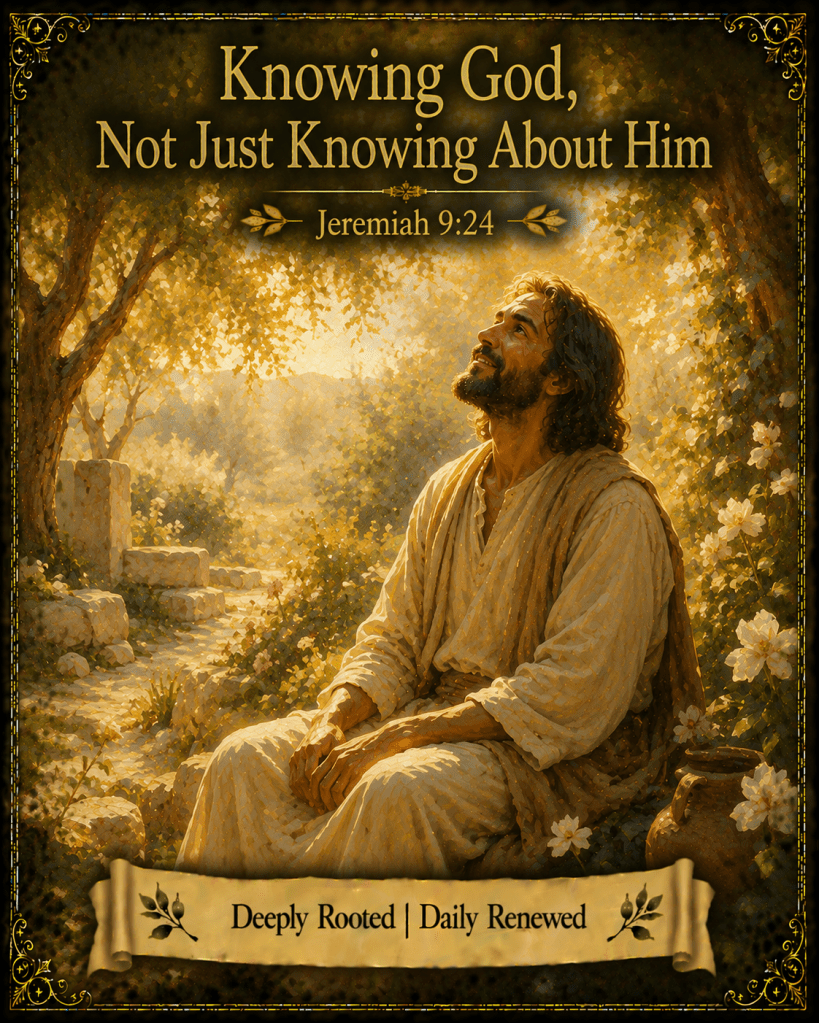
  • Sunday, August 2, 2026–Who God Is — The Character of God: Knowing God, Not Just Knowing About Him

    KEY VERSE

    “Let the one who boasts boast about this: that they have the understanding to know me, that I am the LORD, who exercises kindness, justice and righteousness on earth, for in these I delight.”

    — Jeremiah 9:24


    ROOTED TRUTH

    The greatest pursuit of the human life is not the accumulation of knowledge about God. It is the deepening of a living relationship with Him — knowing Him as He actually is.


    FAITH STORY

    Jeremiah 9 contains one of the most searching passages in all the prophets.

    God speaks through Jeremiah to a people who have been boasting in all the wrong things — their wisdom, their strength, their wealth. And then He reorients everything with a single declaration: if you want to boast, boast in this one thing — that you know Me.

    Not know about Me. Know Me.

    The difference is enormous. A person can accumulate extensive theological knowledge — doctrines, systematic categories, biblical data — while remaining functionally a stranger to the God they are studying. The Pharisees of Jesus’s day were the most rigorous students of Scripture in their generation, and Jesus told them they did not know the Father.

    Knowing God is different. It is relational, experiential, and ongoing. It grows through prayer and through suffering, through obedience and through failure, through seasons of abundance and seasons of desperate need. It is not primarily cerebral — it is covenantal. It is the knowledge that comes from walking with someone long enough to trust them in the dark.

    And God says that this knowledge — knowing that He exercises kindness, justice, and righteousness — is what He delights in. Not impressive credentials. Not spiritual achievement. The knowing.

    This week we are going to spend time with six attributes of God — not as theological categories to file away, but as living realities to encounter. Each attribute is not just something God does — it is something God is. And knowing who He is changes everything about how we live, how we pray, how we suffer, and how we trust.

    Come to this week not as a student cramming for an exam, but as someone sitting down with a Person they want to know better.

    He is worth knowing. And He wants to be known.


    SCRIPTURE FOR DEEPER ROOTS

    Jeremiah 9:23–24 — Boasting in knowing God.

    John 17:3 — “Now this is eternal life: that they know you, the only true God.”

    Philippians 3:10 — “I want to know Christ — yes, to know the power of his resurrection.”


    DAILY PRACTICE

    Spend ten minutes today simply telling God what you already know about Him — not asking for anything, not confessing anything, just describing who He is as you have come to know Him. Speak it aloud if you can. What you know about His character, what you have experienced of His faithfulness, what you believe about who He is. This week, let knowing Him deepen — not just knowing about Him.


    DAILY PRAYER

    Father, I want to know You — not just accumulate facts about You. I want the kind of knowledge that comes from walking with You through every season, from trusting You in the dark, from finding You faithful in the impossible. This week, as we walk through who You are, open the eyes of my heart. Let each attribute become a living reality rather than a theological category. I want to know You more. Amen.


    DEEP REFLECTION

    1.  What is the difference between knowing about God and knowing God? Can you identify a moment in your life when head knowledge became heart knowledge — when something you believed about God became something you had experienced of Him?

    2.  God says He delights in being known — in people understanding His kindness, justice, and righteousness. What does it tell you about the nature of God that He wants to be known rather than merely acknowledged?

    3.  Which attribute of God do you feel you know most experientially — not just intellectually — and which one do you most need to encounter more deeply this week?


    #DeeplyRooted#DailyRenewed Devotions for a Grounded and Growing Faith
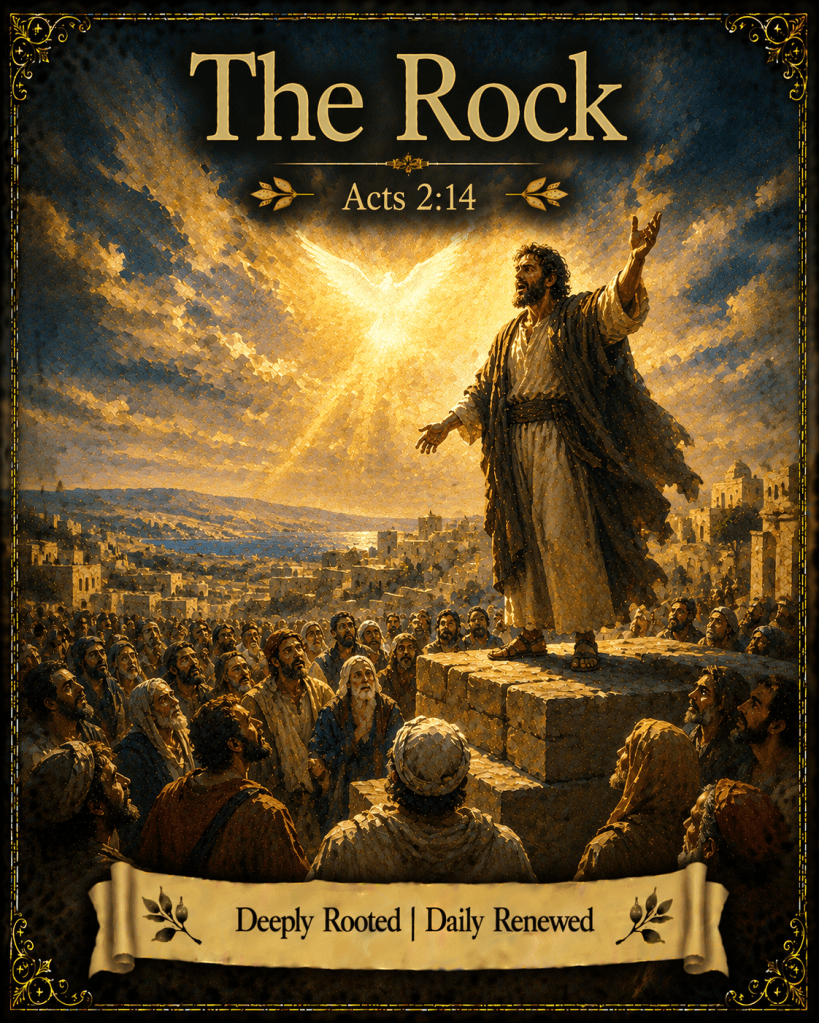
  • Saturday, August 1, 2026–From Fisherman to Rock — The Life of Peter: The Rock

    KEY VERSE

    “Then Peter stood up with the Eleven, raised his voice and addressed the crowd: ‘Fellow Jews and all of you who live in Jerusalem, let me explain this to you; listen carefully to what I say.’”

    — Acts 2:14


    ROOTED TRUTH

    The man who denied Jesus three times by a fire now stood before thousands and proclaimed Him without flinching. That is what restoration and the Holy Spirit produce together.


    FAITH STORY

    Fifty days after the resurrection, on the day of Pentecost, something happened that changed history.

    The Holy Spirit fell on the gathered believers — wind and fire and languages — and the watching crowd was bewildered. Some mocked: they are drunk.

    And Peter stood up.

    This is the same Peter who had hidden in a locked room after the crucifixion. The same Peter who had denied Jesus three times to a servant girl. The same Peter who had gone back to fishing. The same Peter who had wept bitterly in the darkness.

    He stood up in front of thousands — Jews from every nation under heaven who had gathered for the festival — and he preached. He preached Jesus of Nazareth, crucified and risen. He preached with the confidence of a man who had seen the risen Lord, been restored by Him, and now carried His Spirit within him.

    Three thousand people were baptized that day.

    The transformation is breathtaking. From denial to declaration. From the courtyard fire to the streets of Jerusalem. From hiding to proclaiming. The rock that Jesus had named him — before Peter had done anything to earn it, before the failures that would come — had finally, fully arrived.

    And it had arrived not despite the failures but through them. Peter’s credibility was not undermined by his denial — it was deepened by his restoration. A man who had failed that catastrophically and been restored that completely had something to say about the grace of God that no unblemished record could have produced.

    Your failures do not disqualify you from your calling. In the hands of a redeeming God, they often become the very foundation of your most powerful testimony.

    Peter the fisherman became Peter the rock. He always was. It just took the whole story to reveal it.


    SCRIPTURE FOR DEEPER ROOTS

    Acts 2:1–41 — Pentecost and Peter’s sermon.

    2 Corinthians 12:9 — “My power is made perfect in weakness.”

    1 Peter 2:9 — “You are a chosen people, a royal priesthood, a holy nation, God’s special possession.”


    DAILY PRACTICE

    As you close this week, reflect on the full arc of Peter’s story — fisherman, follower, confessor, denier, restored disciple, Spirit-filled preacher. Write a brief reflection: where do you most see yourself in Peter’s story right now? Which chapter of his life most closely mirrors your own season? Then write down one way your own story — including its failures — positions you to speak to someone else about the grace of God. That testimony is waiting. Don’t hide it.


    DAILY PRAYER

    Father, You turned a denier into a preacher and a fisherman into a rock. You did not waste a single moment of Peter’s story — not the boldness or the failure or the tears or the restoration. I trust You to do the same with mine. Every chapter, every failure, every grace — let it all become something You speak through. Fill me with the same Spirit that filled Peter on Pentecost. I have something to say about what You have done. Let me say it. Amen.


    DEEP REFLECTION

    1.  Peter’s greatest sermon came after his greatest failure. How does your own experience of failure and restoration give you credibility and depth in speaking about God’s grace that an unblemished record never could?

    2.  The Holy Spirit transformed Peter’s boldness from impulsive and self-reliant to Spirit-empowered and unshakeable. What is the difference between natural boldness and Spirit-filled courage — and how do you cultivate the latter?

    3.  Looking back over the whole week with Peter — the new name, the nets, the water, the confession, the denial, the restoration, and Pentecost — which moment of Peter’s story has most deeply spoken to where you are right now, and what will you carry forward?


    #DeeplyRooted#DailyRenewed Devotions for a Grounded and Growing Faith
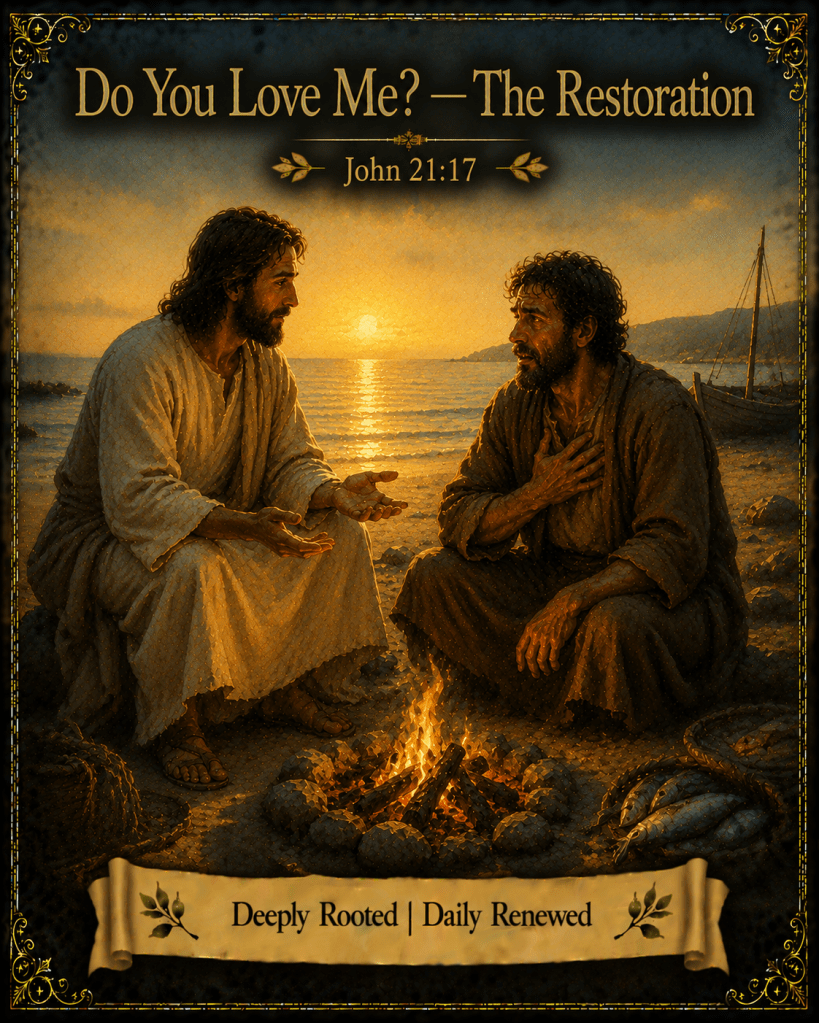
  • Friday, July 31, 2026–From Fisherman to Rock — The Life of Peter: Do You Love Me?—The Restoration

    KEY VERSE

    “The third time he said to him, ‘Simon, son of John, do you love me?’ Peter was hurt because Jesus asked him the third time, ‘Do you love me?’ He said, ‘Lord, you know all things; you know that I love you.’ Jesus said, ‘Feed my sheep.’”

    — John 21:17


    ROOTED TRUTH

    Jesus did not restore Peter with a lecture or a probation period. He restored him with a question — asked three times, once for each denial — and a renewed call.


    FAITH STORY

    After the resurrection, Peter had gone back to fishing.

    It is easy to understand why. The denial was behind him. Jesus was risen — he had seen Him — but the weight of what he had done in the courtyard must have been immense. So he went back to what he knew. Back to the boat. Back to the nets. Back to the life he had lived before Jesus had called him away from it.

    And Jesus came to him there — on the beach, in the morning, by a charcoal fire.

    The charcoal fire is significant. There were only two charcoal fires in the Gospels. The one in the courtyard where Peter denied Jesus three times. And this one. Jesus brought Peter back to the scene of the failure — not to shame him, but to heal him at the exact point where the wound had been made.

    Three times Jesus asked: do you love me? Three times Peter answered yes. Three times Jesus gave him a commission: feed my lambs, tend my sheep, feed my sheep.

    The symmetry is deliberate and beautiful. Three denials answered by three affirmations. Three abandonments answered by three recommissions. Jesus did not pretend the courtyard hadn’t happened. He addressed it — directly, tenderly, completely — and then gave Peter not less responsibility than before, but more.

    This is what restoration looks like in the hands of Jesus. Not a demotion. Not a probationary period. Not a lifetime of secondary status because of a catastrophic failure. A question, an honest answer, and a renewed call to the very work that failure had seemed to disqualify him from.

    Do you love me? It is still the only question that matters. And the honest answer is still enough to begin again.


    SCRIPTURE FOR DEEPER ROOTS

    John 21:1–19 — The restoration of Peter.

    Romans 8:1 — “There is now no condemnation for those who are in Christ Jesus.”

    Micah 7:19 — “You will again have compassion on us; you will tread our sins underfoot.”


    DAILY PRACTICE

    Jesus asked Peter the same question three times — do you love me? — and each time Peter answered, Jesus gave him a renewed commission. Today, sit quietly with the same question Jesus asked Peter. Not as a theological exercise, but as a personal conversation. Lord, you know all things — You know whether I love You. Answer honestly. Then listen for the renewed call that follows the honest answer.


    DAILY PRAYER

    Lord, You know all things. You know I love You — imperfectly, inconsistently, with a heart that is still being formed. I bring You my honest yes, as Peter did, not my polished yes. And I receive from You what You gave him: not condemnation for what is behind, but a commission for what is ahead. Feed Your sheep through me. Use what failure could not disqualify. Amen.


    DEEP REFLECTION

    1.  Jesus restored Peter at a charcoal fire — the same setting as the denial. Why do you think He chose that specific setting, and what does it tell you about how Jesus does the work of healing and restoration?

    2.  Peter was hurt that Jesus asked the third time — he felt the weight of the repetition. But the three questions were a gift, not a wound. Is there a failure in your past that Jesus may be asking you to address three times — fully, not partially — so that the healing can be complete?

    3.  Jesus did not restore Peter to a lesser role — He recommissioned him to a greater one. How does that challenge the way you think about what past failures disqualify you from in God’s purposes?


    #DeeplyRooted#DailyRenewed Devotions for a Grounded and Growing Faith
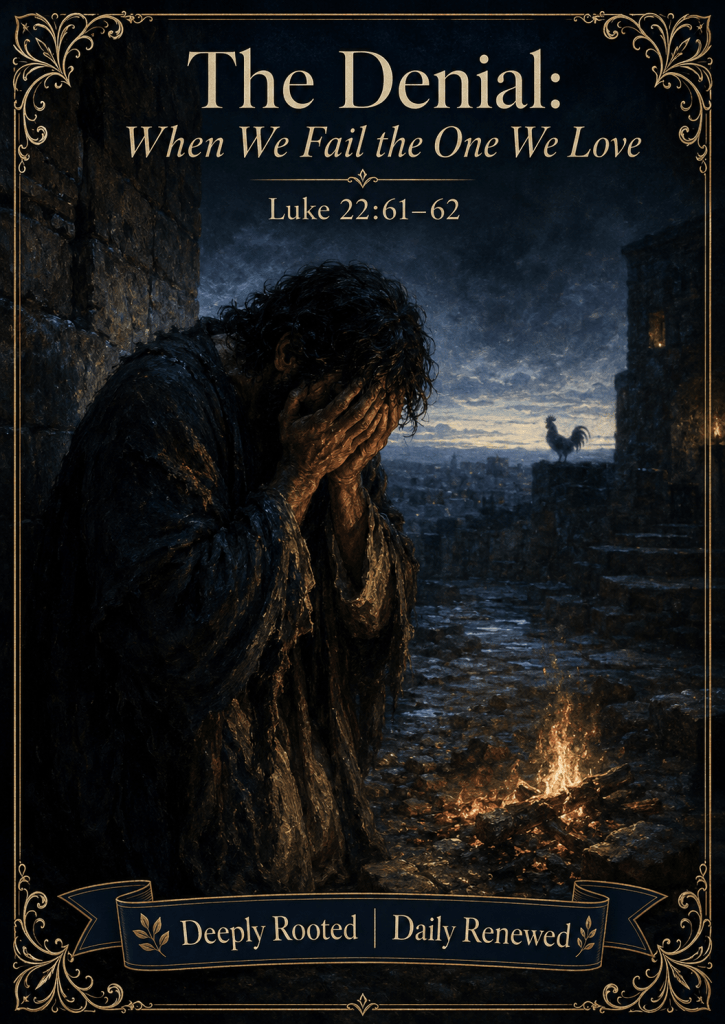
  • Thursday, July 30, 2026–From Fisherman to Rock — The Life of Peter: The Denial—When We Fail The One We Love

    KEY VERSE

    “The Lord turned and looked straight at Peter. Then Peter remembered the word the Lord had spoken to him: ‘Before the rooster crows today, you will disown me three times.’ And he went outside and wept bitterly.”

    — Luke 22:61–62


    ROOTED TRUTH

    Peter’s denial was not the end of his story. But the bitterness of his tears was the necessary beginning of the restoration that was coming.


    FAITH STORY

    Peter had been the most emphatic in his promises.

    Even if all fall away on account of you, I never will. And when Jesus told him he would deny Him three times before morning, Peter was more insistent: even if I have to die with you, I will never disown you.

    A few hours later, by a fire in the courtyard of the high priest’s house, a servant girl said: this man was with him. And Peter said: I don’t know him.

    Three times. Each denial more emphatic than the last. And then the rooster crowed.

    And at that moment — Luke alone records this detail — Jesus turned and looked straight at Peter.

    Not a look of contempt. Not a look of told you so. What was in that look we cannot fully know. But it broke Peter completely. He went outside and wept bitterly.

    The tears matter. They are not incidental to Peter’s story — they are essential to it. Because what you do with the awareness of your failure determines everything that comes next. Judas, who also betrayed Jesus, went out and hanged himself. Peter, who also betrayed Jesus, went out and wept — and came back.

    The difference is not the failure. Both men failed catastrophically. The difference is what the failure drove them toward. Judas toward despair. Peter toward grief that still faced Jesus.

    There is a kind of sorrow that leads to life — the broken, honest grief of a person who knows what they have done and still cannot walk away from the One they love.

    That weeping was Peter on his way back. The rooster crow was not the end of Peter’s story. It was the turning point.


    SCRIPTURE FOR DEEPER ROOTS

    Luke 22:54–62 — Peter’s denial.

    2 Corinthians 7:10 — “Godly sorrow brings repentance that leads to salvation and leaves no regret.”

    Psalm 51:17 — “My sacrifice, O God, is a broken spirit; a broken and contrite heart you, God, will not despise.”


    DAILY PRACTICE

    Peter’s tears were the beginning of his restoration, not the end of his usefulness. Is there a failure — a denial, a compromise, a moment you are deeply ashamed of — that you have been running from rather than bringing to God in honest grief? Today, follow Peter’s example: don’t run from the awareness of what you have done. Bring it to God with the full weight of what it cost — and trust that the Jesus who looked at Peter with that look is the same One looking at you now.


    DAILY PRAYER

    Lord, I have denied You — not always in words, but in choices, in silences, in moments when I knew what the right thing was and chose something else. Like Peter, I am undone by the weight of it. I do not run from that awareness — I bring it to You. Receive my tears. Do not despise my broken and contrite heart. And let this grief be the beginning of something, not the end. Amen.


    DEEP REFLECTION

    1.  Luke records that Jesus turned and looked at Peter at the moment of the third denial. What do you imagine was in that look — and what does it tell you about how Jesus regards us in our moments of failure?

    2.  Both Judas and Peter betrayed Jesus, but their responses to that failure were different. What is the difference between the sorrow that leads to life and the sorrow that leads to despair — and how do you tell which one you are in?

    3.  Peter’s most catastrophic failure came after his greatest confession and after three years walking with Jesus. What does that tell you about the nature of spiritual vulnerability — and what guards against it?


    #DeeplyRooted#DailyRenewed Devotions for a Grounded and Growing Faith
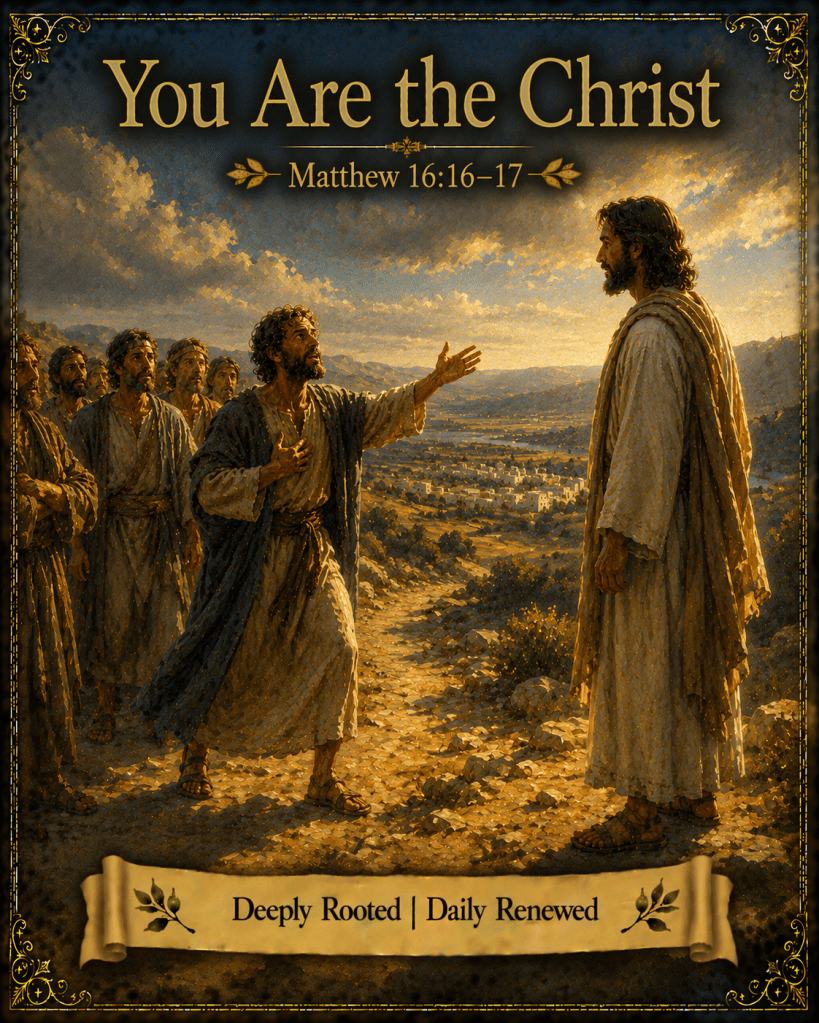
  • Wednesday, July 29, 2026–From Fisherman to Rock — The Life of Peter: You Are The Christ

    KEY VERSE

    “Simon Peter answered, ‘You are the Messiah, the Son of the living God.’ Jesus replied, ‘Blessed are you, Simon son of Jonah, for this was not revealed to you by flesh and blood, but by my Father in heaven.’”

    — Matthew 16:16–17


    ROOTED TRUTH

    The confession that Jesus is the Christ is not a theological conclusion you reason your way to. It is a revelation God gives to those whose hearts are open to receive it.


    FAITH STORY

    Jesus asked his disciples a question on the road to Caesarea Philippi: who do people say the Son of Man is?

    The disciples reported the range of popular opinions — John the Baptist, Elijah, Jeremiah, one of the prophets. Respectable answers. Safe answers. Answers that positioned Jesus as a significant figure without making any ultimate claims.

    Then Jesus made it personal: but what about you? Who do you say I am?

    And Peter answered — with a clarity and boldness that the other disciples had not yet expressed: You are the Messiah, the Son of the living God.

    Jesus’s response was immediate and extraordinary: blessed are you, Simon son of Jonah. This was not revealed to you by flesh and blood, but by my Father in heaven. And on this rock — this confession, this revealed truth — I will build my church.

    Peter’s confession was not the product of superior reasoning or more careful study. Jesus made clear that the Father had revealed it to him. The recognition of who Jesus truly is always comes as a gift — an opening of the eyes that no amount of intellectual effort alone can produce.

    And yet Peter received it and spoke it. Revelation requires a ready heart — one that is open, seeking, and willing to say out loud what has been shown within.

    This confession is still the hinge on which everything turns. Not what others say about Jesus — the opinions, the respectable assessments, the cultural consensus. What you say about Him.

    The question Jesus asked on the road to Caesarea Philippi is still being asked today: but what about you — who do you say I am?

    What is your answer?


    SCRIPTURE FOR DEEPER ROOTS

    Matthew 16:13–20 — Peter’s confession at Caesarea Philippi.

    1 Corinthians 12:3 — “No one can say ‘Jesus is Lord,’ except by the Holy Spirit.”

    John 6:68–69 — “Lord, to whom shall we go? You have the words of eternal life.”


    DAILY PRACTICE

    Jesus asked not what others say, but what you say. Today, write your own answer to His question — not the Sunday school answer, not what you were taught to say, but the living, personal, conviction-filled answer of your own heart. Who is Jesus to you — right now, in this season, based on your own experience of Him? Write it out in full. Then carry that confession through your day as an act of worship.


    DAILY PRAYER

    Lord, You are the Christ — the Son of the living God. I say it not as a formula but as the deepest conviction of my heart. You are who You say You are. You have done what You said You would do. And I stake everything — my life, my future, my eternity — on that truth. Reveal Yourself more fully to me today, as You revealed Yourself to Peter. I want to know You more, not just know about You. Amen.


    DEEP REFLECTION

    1.  Jesus said the confession was not revealed by flesh and blood but by the Father. What is the difference between knowing about Jesus intellectually and having the Father reveal who He actually is? Have you experienced that difference?

    2.  The other disciples had opinions about Jesus — significant, respectful ones. But they stopped short of Peter’s confession. What makes the difference between a high opinion of Jesus and a full confession of His lordship?

    3.  Jesus said on this rock — this confession — I will build my church. What does it mean for the church to be built on the confession of who Jesus is, and how does that truth shape your own participation in the community of faith?


    #DeeplyRooted#DailyRenewed Devotions for a Grounded and Growing Faith
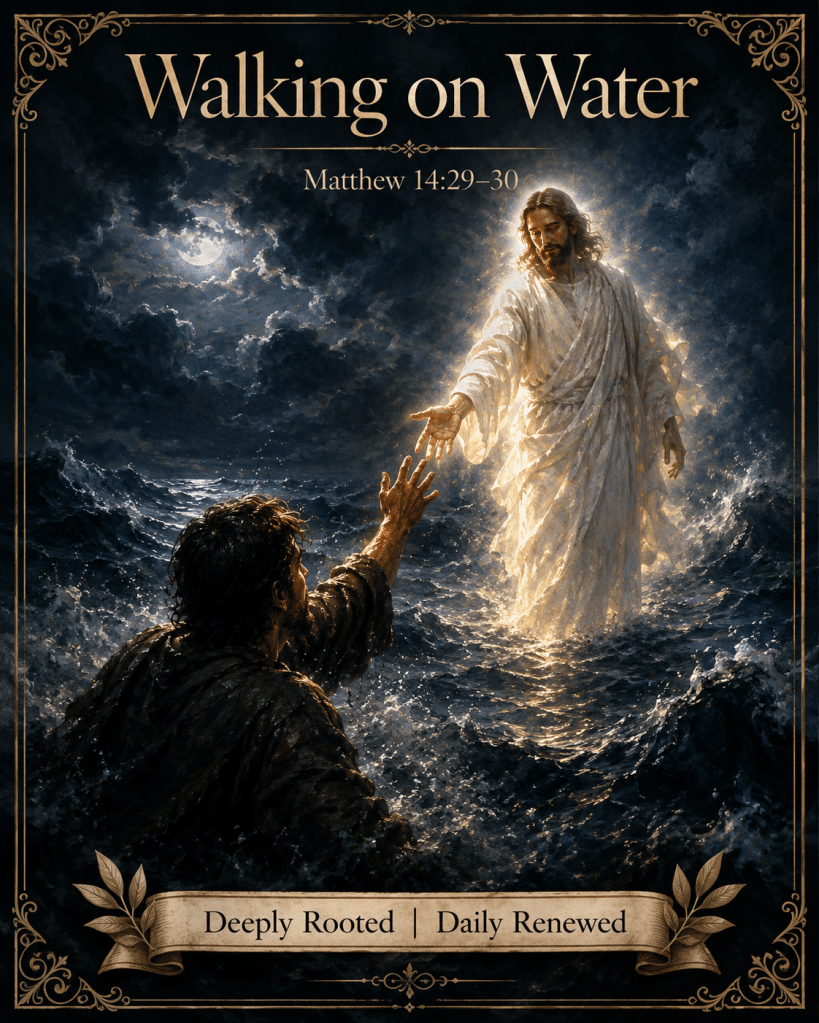
  • Tuesday, July 28, 2026–From Fisherman to Rock — The Life of Peter: Walking On Water

    KEY VERSE

    “Then Peter got down out of the boat, walked on the water and came toward Jesus. But when he saw the wind, he was afraid and, beginning to sink, cried out, ‘Lord, save me!’”

    — Matthew 14:29–30


    ROOTED TRUTH

    Peter is the only person besides Jesus who ever walked on water. He also sank. Both facts matter — and Jesus never let go.


    FAITH STORY

    The disciples were in the boat, straining against the waves, when Jesus came to them walking on the water in the fourth watch of the night.

    They were terrified — they thought He was a ghost. And then Peter said something that is either the boldest or the most impulsive request in the Gospels: Lord, if it’s you, tell me to come to you on the water.

    Jesus said one word: come.

    And Peter got out of the boat. He walked on water. In a storm. Toward Jesus. For a brief, extraordinary moment, a fisherman from Galilee defied everything he knew about how the physical world worked — because his eyes were fixed on the One who made it.

    And then he noticed the wind. He looked away from Jesus and looked at the storm. And the moment his focus shifted, so did his footing. He began to sink.

    Lord, save me.

    Jesus immediately reached out and caught him. You of little faith, why did you doubt?

    It is easy to read this story as a rebuke — and it is, in part. But look at what else is true: Peter got out of the boat. No other disciple did. Eleven men stayed safely seated while one man stepped out onto the water and walked toward Jesus. He sank, yes. But he walked first.

    And Jesus caught him. Immediately. Not after a lecture. Not after Peter proved himself worthy of rescue. He reached out His hand and caught him.

    The boat is safe. But safe doesn’t require faith. Peter’s sinking was in full view of everyone. So was his rescue.

    Which matters more to you right now — staying in the boat, or stepping toward Jesus?


    SCRIPTURE FOR DEEPER ROOTS

    Matthew 14:22–33 — Jesus walks on water.

    Hebrews 12:2 — “Fixing our eyes on Jesus, the pioneer and perfecter of faith.”

    Isaiah 41:13 — “For I am the LORD your God who takes hold of your right hand and says to you, do not fear.”


    DAILY PRACTICE

    Peter sank when he shifted his focus from Jesus to the storm. Identify the storm in your life right now — the circumstance, the fear, the uncertainty — that most consistently pulls your eyes away from Jesus. Write it down. Then write Matthew 14:29 beside it: come. Spend time today deliberately fixing your gaze back on Jesus — through Scripture, through worship, through prayer — and away from the wind.


    DAILY PRAYER

    Lord, I want to be the one who gets out of the boat. I am tired of safe. I am tired of watching from a distance while faith calls me out onto the water. Give me the courage to step out — and when I start to sink, remind me that You reach immediately. I don’t have to have perfect faith. I just have to call Your name. Lord, save me — and I know You will. Amen.


    DEEP REFLECTION

    1.  Peter is the only disciple who walked on water — and the only one who sank. What does the fact that he alone stepped out tell you about the relationship between bold faith and visible failure?

    2.  Jesus said you of little faith — but He also said come and He caught Peter immediately when he sank. What do both responses together tell you about how Jesus regards our imperfect, stumbling attempts at faith?

    3.  The disciples in the boat worshipped Jesus after Peter’s rescue, saying truly you are the Son of God. Peter’s sinking became a testimony for everyone watching. Have your visible failures ever become the occasion for someone else’s encounter with God?


    #DeeplyRooted#DailyRenewed Devotions for a Grounded and Growing Faith
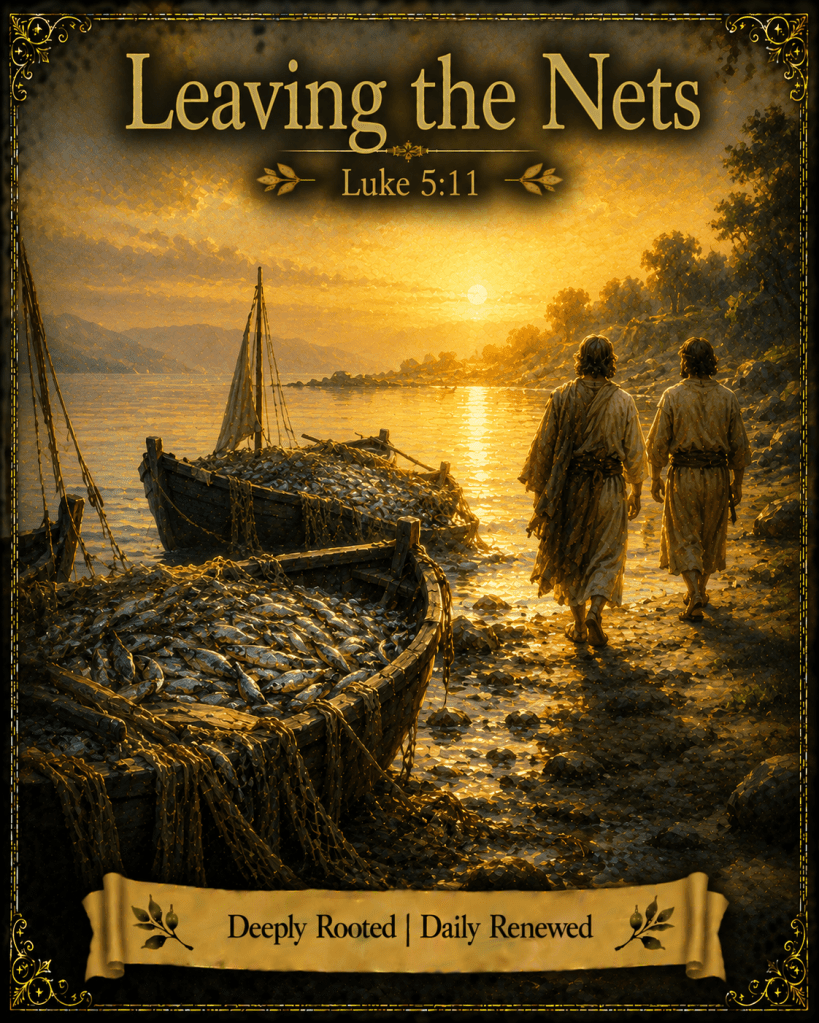
  • Monday, July 27, 2026–From Fisherman to Rock — The Life of Peter: Leaving The Nets

    KEY VERSE

    “So they pulled their boats up on shore, left everything and followed him.”

    — Luke 5:11


    ROOTED TRUTH

    Peter had just caught the largest haul of fish in his career — and he left it all on the beach. The call of Jesus makes everything else look small by comparison.


    FAITH STORY

    Luke’s account of Peter’s calling is richer than it first appears.

    Jesus had borrowed Peter’s boat to use as a platform for teaching the crowd. When He finished, He told Peter to put out into deep water and let down the nets. Peter’s response is honest and very fisherman: Master, we’ve worked hard all night and haven’t caught anything. But because you say so, I will let down the nets.

    What followed was a catch so large that the nets began to break and the boats began to sink. Peter’s partners had to come help. And when Peter saw it, he fell at Jesus’ knees and said: go away from me, Lord; I am a sinful man.

    This is a remarkable response to a miraculous catch. Peter was not celebrating. He was undone. The overwhelming provision had revealed to him, in a moment, the vast distance between who Jesus was and who he was. The abundance became a mirror, and what he saw in the mirror humbled him to his knees.

    Jesus’s response was equally remarkable: don’t be afraid. From now on you will fish for people.

    And when they brought the boats to shore — the greatest catch of their careers still sitting in them, their livelihood secured for weeks — they left everything and followed him.

    This is the economics of the kingdom. Jesus did not ask Peter to leave empty nets. He filled them first. He demonstrated His lordship over the very domain of Peter’s expertise. And then He called him to something larger than anything those nets could hold.

    The call of Jesus always comes to something. Not away from your life — into a bigger one. Not into poverty of meaning — into an abundance of purpose.

    What nets is Jesus asking you to leave on the shore?


    SCRIPTURE FOR DEEPER ROOTS

    Luke 5:1–11 — The miraculous catch and the call of Peter.

    Mark 1:17 — “Come, follow me, and I will send you out to fish for people.”

    Matthew 6:33 — “Seek first his kingdom and his righteousness, and all these things will be given to you as well.”


    DAILY PRACTICE

    Peter left the nets after Jesus had filled them — the call cost him something real and valuable. What is the net in your life right now that Jesus may be asking you to leave on the shore? It may be a security, a plan, a comfort, or an identity built around something other than Him. Name it honestly. Then spend time in prayer asking whether the call to follow is asking you to release your grip on it.


    DAILY PRAYER

    Lord, You filled Peter’s nets before You asked him to leave them. You have been generous with me too — and I am grateful. But I sense there are nets I am still holding that You are asking me to leave on the shore. Give me Peter’s courage — the willingness to walk away from even the full nets when You say come, follow me. Nothing I am holding is worth more than following You. Amen.


    DEEP REFLECTION

    1.  Jesus demonstrated His authority over fishing before calling Peter to leave fishing behind. Why do you think He chose that order — and what does it tell you about how God often prepares us for a call before He makes it?

    2.  Peter’s response to the miraculous catch was not celebration but conviction — go away from me, for I am a sinful man. Why might an overwhelming display of God’s power produce that kind of response, and have you experienced anything similar?

    3.  Peter left full nets, not empty ones. What does that tell you about the nature of following Jesus — that it is not a call away from abundance but toward something even greater?


    #DeeplyRooted#DailyRenewed Devotions for a Grounded and Growing Faith