KEY VERSE
“The Lord turned and looked straight at Peter. Then Peter remembered the word the Lord had spoken to him: ‘Before the rooster crows today, you will disown me three times.’ And he went outside and wept bitterly.”
— Luke 22:61–62
ROOTED TRUTH
Peter’s denial was not the end of his story. But the bitterness of his tears was the necessary beginning of the restoration that was coming.
FAITH STORY
Peter had been the most emphatic in his promises.
Even if all fall away on account of you, I never will. And when Jesus told him he would deny Him three times before morning, Peter was more insistent: even if I have to die with you, I will never disown you.
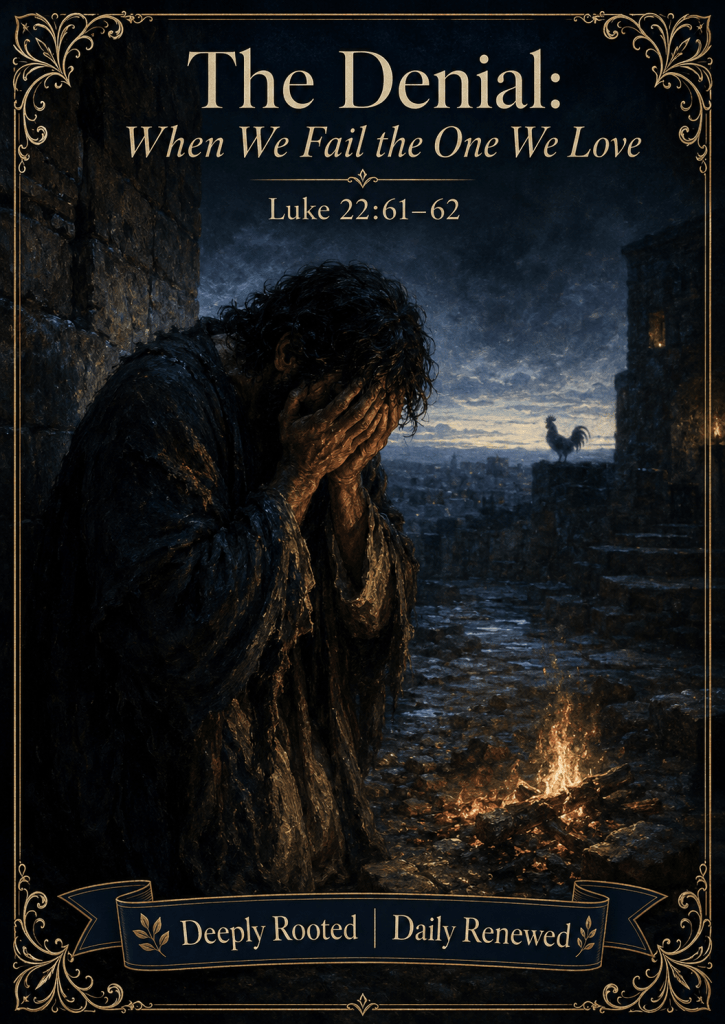
A few hours later, by a fire in the courtyard of the high priest’s house, a servant girl said: this man was with him. And Peter said: I don’t know him.
Three times. Each denial more emphatic than the last. And then the rooster crowed.
And at that moment — Luke alone records this detail — Jesus turned and looked straight at Peter.
Not a look of contempt. Not a look of told you so. What was in that look we cannot fully know. But it broke Peter completely. He went outside and wept bitterly.
The tears matter. They are not incidental to Peter’s story — they are essential to it. Because what you do with the awareness of your failure determines everything that comes next. Judas, who also betrayed Jesus, went out and hanged himself. Peter, who also betrayed Jesus, went out and wept — and came back.
The difference is not the failure. Both men failed catastrophically. The difference is what the failure drove them toward. Judas toward despair. Peter toward grief that still faced Jesus.
There is a kind of sorrow that leads to life — the broken, honest grief of a person who knows what they have done and still cannot walk away from the One they love.
That weeping was Peter on his way back. The rooster crow was not the end of Peter’s story. It was the turning point.
SCRIPTURE FOR DEEPER ROOTS
Luke 22:54–62 — Peter’s denial.
2 Corinthians 7:10 — “Godly sorrow brings repentance that leads to salvation and leaves no regret.”
Psalm 51:17 — “My sacrifice, O God, is a broken spirit; a broken and contrite heart you, God, will not despise.”
DAILY PRACTICE
Peter’s tears were the beginning of his restoration, not the end of his usefulness. Is there a failure — a denial, a compromise, a moment you are deeply ashamed of — that you have been running from rather than bringing to God in honest grief? Today, follow Peter’s example: don’t run from the awareness of what you have done. Bring it to God with the full weight of what it cost — and trust that the Jesus who looked at Peter with that look is the same One looking at you now.
DAILY PRAYER
Lord, I have denied You — not always in words, but in choices, in silences, in moments when I knew what the right thing was and chose something else. Like Peter, I am undone by the weight of it. I do not run from that awareness — I bring it to You. Receive my tears. Do not despise my broken and contrite heart. And let this grief be the beginning of something, not the end. Amen.
DEEP REFLECTION
1. Luke records that Jesus turned and looked at Peter at the moment of the third denial. What do you imagine was in that look — and what does it tell you about how Jesus regards us in our moments of failure?
2. Both Judas and Peter betrayed Jesus, but their responses to that failure were different. What is the difference between the sorrow that leads to life and the sorrow that leads to despair — and how do you tell which one you are in?
3. Peter’s most catastrophic failure came after his greatest confession and after three years walking with Jesus. What does that tell you about the nature of spiritual vulnerability — and what guards against it?
#DeeplyRooted#DailyRenewed Devotions for a Grounded and Growing Faith
 Deeply Rooted Daily Renewed
Leave a comment