KEY VERSE
“When he comes, he will prove the world to be in the wrong about sin and righteousness and judgment.”
— John 16:8
ROOTED TRUTH
Conviction from the Holy Spirit is not condemnation. It is one of the most loving things God does — shining a light on what is wrong so that what is right can be restored.
FAITH STORY
The word convict sounds harsh to modern ears.
We live in a culture that is deeply allergic to the idea that anything we do might be genuinely wrong — that someone or something outside ourselves has the right to name our behavior as sin and call us to change. The word convict sounds like accusation, like judgment, like the removal of autonomy.
But the conviction of the Holy Spirit is nothing like that. Understanding what it actually is requires understanding who is doing it and why.
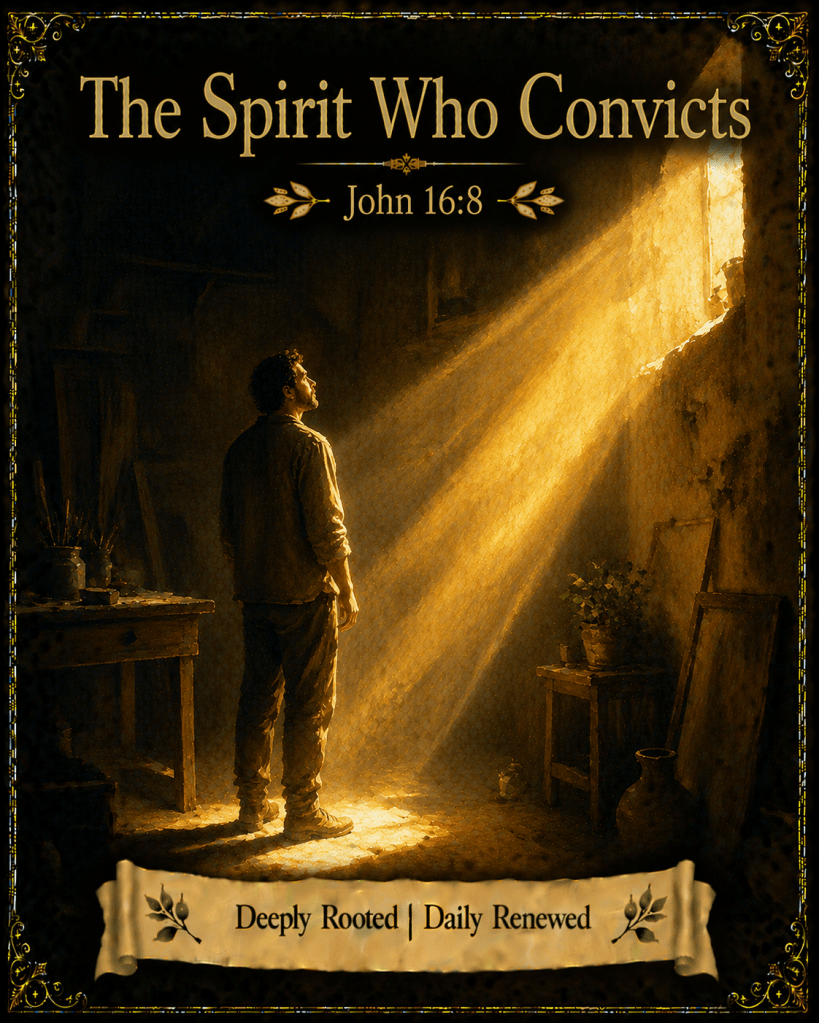
The Spirit who convicts is the same Spirit Jesus described as the Comforter, the Advocate, the one who comes alongside to help. He is not a prosecuting attorney bent on condemning. He is a loving counselor who shines a light on what is wrong in order to make what is right possible.
The Greek word for convict — elegcho — carries the idea of exposing something to the light so that its true nature becomes visible. Not to humiliate, but to heal. Not to condemn, but to open the door to repentance and restoration.
Conviction and condemnation feel similar on the surface — both produce discomfort about sin. But they lead in entirely different directions. Condemnation says you are too far gone, there is no way back, you are defined by this. Conviction says this is not who you are meant to be, there is a way back, come.
When you feel that uncomfortable inner knowing — the awareness that what you are doing or about to do is wrong, the restlessness that won’t let you settle when you have compromised — that is the Holy Spirit at work. Not punishing you. Inviting you.
The right response to conviction is not self-flagellation or shame spiral. It is the same response David gave in Psalm 51: acknowledge what is true, receive what grace offers, and return to the path.
The Spirit who convicts is the Spirit who restores. They are the same Person.
SCRIPTURE FOR DEEPER ROOTS
John 16:7–11 — The Spirit convicts the world.
Psalm 51:10–12 — David’s response to conviction.
2 Corinthians 7:10 — “Godly sorrow brings repentance that leads to salvation and leaves no regret.”
DAILY PRACTICE
Ask the Holy Spirit today to search your heart — specifically and honestly. Use David’s prayer from Psalm 139:23–24 as your starting point: search me, God, and know my heart; test me and know my anxious thoughts. See if there is any offensive way in me, and lead me in the way everlasting. Then sit quietly and receive whatever surfaces — not with shame, but with openness. Respond to conviction with repentance, not with self-condemnation.
DAILY PRAYER
Holy Spirit, search me. I invite Your light into the corners of my heart that I have kept in shadow. I know there are patterns, attitudes, and choices that You have been nudging me about that I have been ignoring or minimizing. I receive Your conviction today — not as condemnation, but as an invitation. Show me what needs to change. I will not run from the light. Amen.
DEEP REFLECTION
1. What is the practical difference between conviction from the Holy Spirit and condemnation from the enemy? How do you tell them apart in your own experience?
2. Is there something the Spirit has been convicting you about that you have been resisting or postponing? What has kept you from responding?
3. 2 Corinthians 7:10 says godly sorrow leads to repentance that leaves no regret — whereas worldly sorrow leads to death. What distinguishes godly sorrow from the shame spiral that condemnation produces?
#DeeplyRooted#DailyRenewed Devotions for a Grounded and Growing Faith


Leave a comment