KEY VERSE
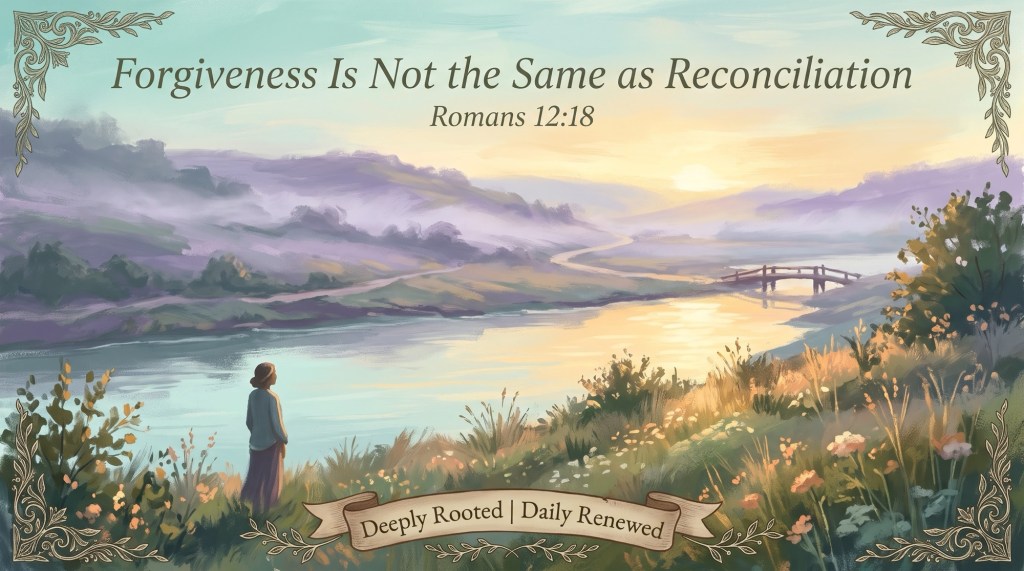
“If it is possible, as far as it depends on you, live at peace with everyone.”
— Romans 12:18
ROOTED TRUTH
Forgiving someone does not always mean returning to the same relationship or ignoring danger. Forgiveness is something we do before God. Reconciliation requires two people, trust that is rebuilt, and, at times, boundaries. We are called to do our part.
FAITH STORY
One of the most common fears about forgiveness is that it means going back to the way things were. We worry that if we forgive, we are saying the offense did not matter, or that we must let the person hurt us again. That is not what Scripture teaches.
Forgiveness and reconciliation are related, but they are not the same. Forgiveness is a decision made in our own hearts before God. We release the debt and give up the right to revenge. It can happen even if the other person never apologizes, and even if they are no longer in our lives.
Reconciliation is the restoration of a relationship. It requires both people: honest acknowledgment, genuine repentance, and trust that is rebuilt over time. Trust is earned, not simply handed over. It is possible to forgive someone fully while still being wise about how close you let them come.
Notice the careful wording of Romans 12:18: “If it is possible, as far as it depends on you, live at peace with everyone.” Paul recognizes that peace is not always possible. We are responsible for our part, but we are not responsible for the other person’s response.
This matters especially for those who have been hurt deeply. If someone has abused you, deceived you, or put you in danger, forgiveness does not require you to stay in harm’s way or to pretend that it never happened. Wisdom and safety matter. If you are in a situation like this, seeking help from a pastor or trusted counselor is a wise step.
Paul also reminds us in Romans 12:19, “Do not take revenge, my dear friends, but leave room for God’s wrath.” Forgiveness does not mean there are no consequences. It means we trust God to be the Judge, and we put down the burden of carrying that role ourselves.
Where reconciliation is possible and safe, pursue it with humility and prayer. Where it is not, rest in the freedom of forgiveness. Either way, you can live at peace with God, and that is a place of true rest.
SCRIPTURE FOR DEEPER ROOTS
Romans 12:19 — “Do not take revenge, my dear friends, but leave room for God’s wrath, for it is written: ‘It is mine to avenge; I will repay,’ says the Lord.”
Proverbs 22:3 — “The prudent see danger and take refuge, but the simple keep going and pay the penalty.”
Matthew 5:24 — “First go and be reconciled to them; then come and offer your gift.”
DAILY PRACTICE
Consider one relationship where you have forgiven, or are working toward forgiveness. Ask God: Is reconciliation possible and wise here? What is my part? If it is not safe or possible, pray for peace and ask Him to guard your heart. If you need support, consider talking to a pastor or counselor.
DAILY PRAYER
Lord, give me wisdom to know the difference between forgiving and reconciling. Help me to do my part to live at peace, and give me discernment about how to protect my heart. Where reconciliation is possible, make a way. Where it is not, give me rest in You. Amen.
DEEP REFLECTION
1. Have you ever felt that forgiving someone meant you had to let them back in? How has this day’s passage changed that view?
2. What does “as far as it depends on you” mean in a relationship you are thinking about?
3. Is there someone you might need to seek wise counsel about as you walk through forgiveness?
#DeeplyRooted#DailyRenewed
Devotions for a Grounded and Growing Faith


Leave a Reply