Author: gdousay

  • Sunday, May 17, 2026–The Beatitudes: The Upside-Down Kingdom

    KEY VERSE

    “Now when Jesus saw the crowds, he went up on a mountainside and sat down. His disciples came to him, and he began to teach them.”

    — Matthew 5:1–2


    ROOTED TRUTH

    The Beatitudes do not describe the path to blessing. They describe what a person looks like who has already found it — in Christ.


    FAITH STORY

    Jesus sat down on a hillside and turned the world’s value system upside down.

    Everything the crowd had been taught to pursue — strength, status, influence, comfort, public approval — Jesus set aside. And in its place, He declared blessing over the people no one was blessing: the broken, the grieving, the gentle, the hungry, the merciful, the pure, the peacemakers, the persecuted.

    The Beatitudes are not a to-do list. They are not eight steps to earning God’s favor or a checklist for becoming a better person. They are a portrait — a description of what kingdom life actually looks like from the inside.

    The word translated “blessed” in the original Greek is makarios. It carries the idea of a deep, settled well-being that is independent of circumstances. Not happiness that comes and goes with the weather of life, but a flourishing that is rooted in something unshakeable — the presence and approval of God Himself.

    Each beatitude follows the same pattern: here is a quality the world overlooks or dismisses, and here is why God sees it as the very soil in which kingdom life grows. Poverty of spirit. Mourning. Meekness. Hunger. Mercy. Purity. Peacemaking. Persecution.

    None of these are comfortable. None of them are what the world is chasing. And yet Jesus says — over and over, eight times — blessed. Flourishing. Deeply well.

    This week we will sit with each beatitude and let it do its work. Not as a standard to measure up to, but as an invitation to see your life — and your struggles — through the lens of the kingdom.

    The world says: blessed are the strong, the successful, the celebrated. Jesus says something else entirely. Let Him redefine what it means to be truly well.


    SCRIPTURE FOR DEEPER ROOTS

    Matthew 5:1–12 — The Beatitudes in full.

    Luke 6:20–23 — Luke’s account of the Beatitudes.

    Romans 12:2 — “Do not conform to the pattern of this world, but be transformed by the renewing of your mind.”


    DAILY PRACTICE

    Read Matthew 5:1–12 slowly, twice. The first time, read it as if you are hearing it for the very first time — try to feel the shock it would have produced in its original hearers. The second time, read it personally — which beatitude lands most heavily on you today, and why? Sit with that one throughout the week.


    DAILY PRAYER

    Lord, I confess that I have absorbed the world’s definition of blessing more than I have received Yours. This week, recalibrate me. Teach me to see my life, my struggles, and my character through the lens of Your kingdom. Let the Beatitudes become more than words — let them become the shape of who I am becoming. Amen.


    DEEP REFLECTION

    1.  The Beatitudes describe qualities the world tends to overlook or even despise. Which one surprises you most when Jesus calls it blessed — and why?

    2.  How does understanding “blessed” as deep, settled well-being rather than surface-level happiness change how you read the Beatitudes?

    3.  Which of the eight beatitudes feels most foreign to your natural instincts? What does that reveal about where the world’s values have shaped you more than the kingdom’s?


    #DeeplyRooted#DailyRenewed Devotions for a Grounded and Growing Faith

  • Saturday, May 16, 2026–The Prayers Of Jesus: The Prayer Of Trust-“Into Your Hands”

    KEY VERSE

    “Jesus called out with a loud voice, ‘Father, into your hands I commit my spirit.’”

    — Luke 23:46


    ROOTED TRUTH

    The last prayer of Jesus was not a request. It was a release — and it is the prayer we are all being invited to pray with our whole lives.


    FAITH STORY

    These were the last words Jesus spoke before He died.

    Not a cry for rescue. Not a final argument for why things should be different. Not a prayer for a miracle. Just this: Father, into Your hands I commit my spirit.

    He was quoting Psalm 31:5 — a psalm the Jewish people were taught to pray as a bedtime prayer from childhood. The last words of the day, every day: into Your hands I commit my spirit. Jesus died with a prayer He had been praying since He was a boy. And in the moment of His greatest need, that prayer was enough.

    There is a profound theology packed into this single sentence. Commitment implies trust — not just passive acceptance, but an active handing over. Into Your hands — not into circumstance, not into fate, not into nothing. Into the hands of a Father He knew completely and trusted absolutely. I commit my spirit — the most precious and irreplaceable part of who He was.

    Jesus held nothing back. He surrendered everything — even His life — into the care of the One He knew would not waste it.

    And the Father didn’t. Three days later, the tomb was empty.

    This is the prayer that closes the week. And in many ways, it is the prayer that closes every week, every season, every chapter of your life. We are always, ultimately, at the place of needing to release what we cannot control into the hands of the One who can.

    You don’t know what tomorrow holds. But you know whose hands hold tomorrow. Into those hands, commit your spirit — your fears, your future, your unanswered questions, your unfinished stories.

    He is faithful. He proved it on the third day. He will prove it again.


    SCRIPTURE FOR DEEPER ROOTS

    Psalm 31:5 — “Into your hands I commit my spirit; deliver me, LORD, my faithful God.”

    1 Peter 4:19 — “Those who suffer according to God’s will should commit themselves to their faithful Creator.”

    2 Timothy 1:12 — “I know whom I have believed, and am convinced that he is able to guard what I have entrusted to him.”


    DAILY PRACTICE

    As you close this week, write down everything you are still holding tightly — every fear, unanswered prayer, uncertain outcome, and unresolved situation. Then, one by one, pray over each one: “Father, into Your hands I commit this.” Physically turn your hands palm-up as you pray — it is a small act that carries real meaning. You are releasing, not giving up. There is a difference, and God honors it.


    DAILY PRAYER

    Father, into Your hands I commit my spirit. I commit what I understand and what I don’t. I commit what has been resolved and what hasn’t. I commit the relationships, the finances, the health, the future — all of it. I am not giving up. I am trusting You. You held Jesus through death and brought Him out the other side. You can hold me through this. I am Yours. Amen.


    DEEP REFLECTION

    1.  Jesus quoted a childhood bedtime prayer in His final moment. What does it tell you about the importance of building a foundation of trust in God during ordinary seasons — so it is there when extraordinary ones arrive?

    2.  What is the difference between committing something into God’s hands and simply giving up on it? How do you know which one you’re doing?

    3.  Looking back over this entire week of studying the prayers of Jesus — which prayer has most deeply touched something in you, and how will you carry it forward into your own prayer life?


    #DeeplyRooted#DailyRenewed Devotions for a Grounded and Growing Faith
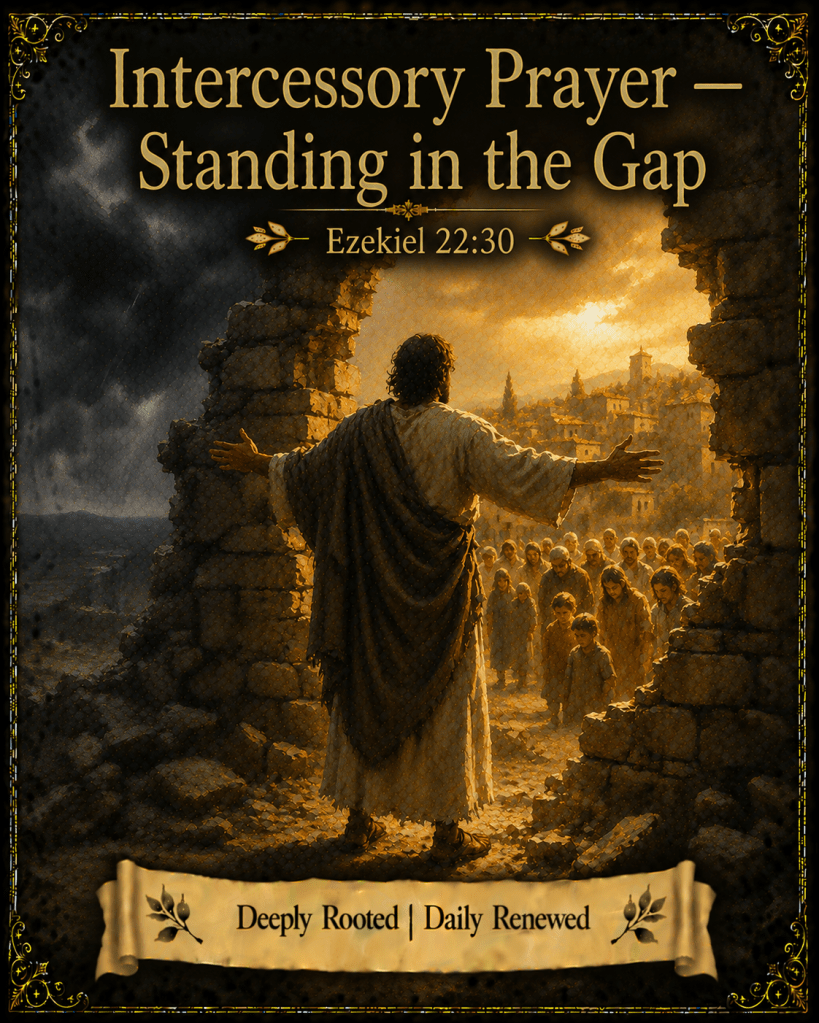
  • Friday, May 15, 2026–The Prayers Of Jesus: The Prayer Of Thanks-I Thank You That You Heard Me

    KEY VERSE

    “Father, I thank you that you have heard me. I knew that you always hear me.”

    — John 11:41–42


    ROOTED TRUTH

    Jesus gave thanks before the miracle happened. That is not positive thinking — it is the posture of someone who knows the Father so well that the answer is already certain before it arrives.


    FAITH STORY

    Lazarus had been in the tomb for four days when Jesus arrived.

    Mary and Martha were grieving. The mourners were weeping. And when Jesus asked them to roll away the stone, Martha protested — there would be a smell. It was too late. The situation was beyond hope.

    Jesus stood before the sealed tomb and prayed. And His prayer didn’t ask for anything. It gave thanks.

    “Father, I thank you that you have heard me. I knew that you always hear me.”

    The miracle hadn’t happened yet. Lazarus was still dead. The stone was still in place. And Jesus thanked the Father — past tense — for hearing Him. As if it were already done.

    This is not presumption. This is intimacy. It is the prayer of someone so aligned with the Father, so confident in His character, so rooted in a relationship of constant communion, that thanksgiving precedes the answer because trust in the One who answers is already complete.

    Jesus prayed this prayer out loud, He said, for the benefit of the people standing there — so they would believe. The thanksgiving was itself a testimony. This is who my Father is. This is how He works. Watch.

    Then He called Lazarus out of the tomb.

    How would your prayer life change if you prayed with this kind of prior confidence? Not demanding outcomes, not bargaining with God, but thanking Him in advance because you know — you know — that He hears you and that He is at work?

    You have a Father who always hears you. That is worth thanking Him for right now, before you see the outcome.


    SCRIPTURE FOR DEEPER ROOTS

    Philippians 4:6 — “In every situation, by prayer and petition, with thanksgiving, present your requests to God.”

    1 Thessalonians 5:18 — “Give thanks in all circumstances; for this is God’s will for you in Christ Jesus.”

    Psalm 100:4 — “Enter his gates with thanksgiving and his courts with praise.”


    DAILY PRACTICE

    Before you bring a single request to God today, spend five full minutes giving thanks — specifically and out loud. Thank Him for prayers He has already answered. Thank Him for who He is. Thank Him for the prayers you are still waiting on, as if He has already heard them — because He has. Notice how thanksgiving shifts the atmosphere of your prayer time.


    DAILY PRAYER

    Father, I thank You that You hear me. Not that You sometimes hear me, or hear me when I pray correctly, but that You always hear me. Right now, in this moment, You are attentive to my voice. I bring You my gratitude before I bring You my requests — because who You are is greater than what I need. Thank You. Thank You. Thank You. Amen.


    DEEP REFLECTION

    1.  Jesus gave thanks before the miracle, not after. What would it look like practically to cultivate that same posture of prior thanksgiving in your own prayer life?

    2.  “I knew that you always hear me” — Jesus said this with complete certainty. How confident are you that God hears your prayers? What affects that confidence, and what does Jesus’ example say about the foundation it should rest on?

    3.  How does leading with thanksgiving — rather than requests — change not just your prayer but your entire orientation toward God throughout the day?


    #DeeplyRooted#DailyRenewed Devotions for a Grounded and Growing Faith
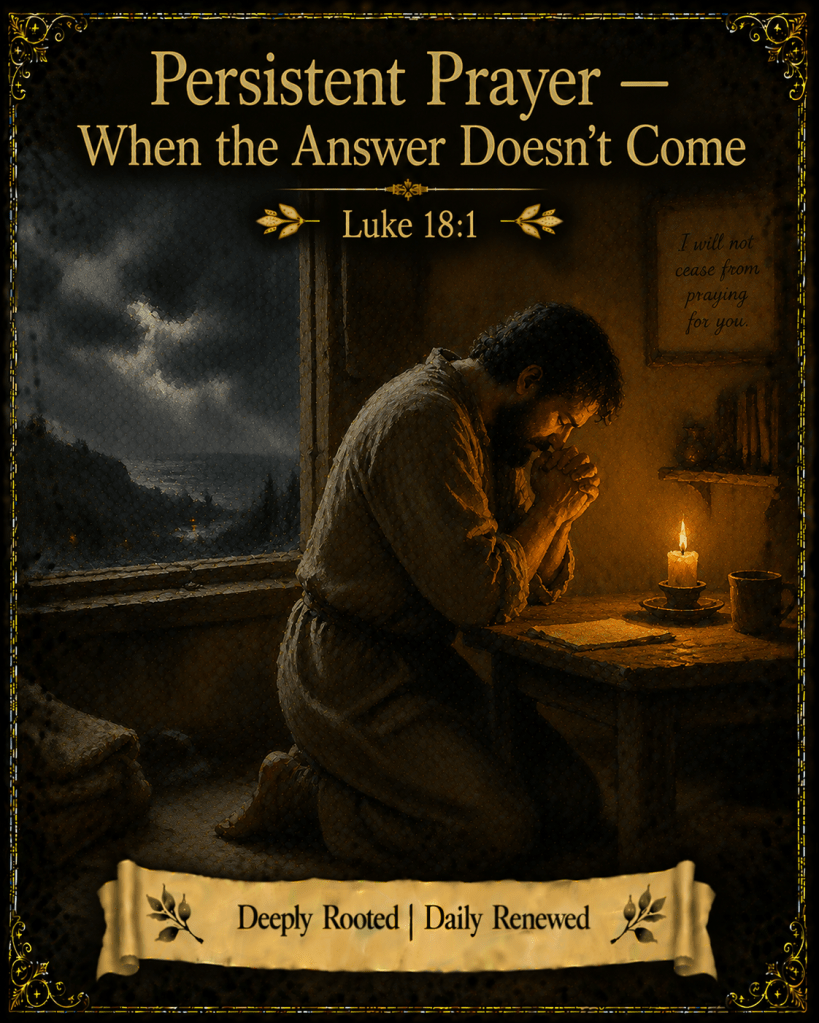
  • Thursday, May 14, 2026–The Prayers Of Jesus: The Prayer From The Cross-Father, Forgive Them

    KEY VERSE

    “Jesus said, ‘Father, forgive them, for they do not know what they are doing.’”

    — Luke 23:34


    ROOTED TRUTH

    Forgiveness offered from the cross — at the moment of greatest injustice — is the most radical prayer ever prayed. And Jesus meant it for us too.


    FAITH STORY

    They had beaten Him, mocked Him, stripped Him, and nailed Him to a cross. And the first words He spoke from it were a prayer for the people doing it.

    “Father, forgive them, for they do not know what they are doing.”

    There is no prayer in all of human history as staggering as this one. Not because of its length or theological sophistication, but because of when it was prayed and who it was prayed for. At the point of maximum suffering, inflicted by the very people He came to save, Jesus did not call for justice. He called for forgiveness.

    This prayer reveals something essential about the nature of God: forgiveness is not His reluctant concession. It is His instinct. Even from the cross, even in agony, even toward those who deserved it least — His first impulse was mercy.

    But there is something else here. The Roman soldiers didn’t fully understand what they were doing. Neither did the crowd. Neither, in many ways, did the religious leaders. And Jesus acknowledged that — not as an excuse, but as the reason forgiveness was possible. Ignorance doesn’t eliminate guilt, but it does invite grace.

    You and I were among those He prayed for. We were the ones who didn’t fully know. And this prayer — prayed in real time, from real pain — is part of what purchased your freedom.

    Now the question comes back to us: who are you being asked to forgive? Who has wronged you in ways that feel unforgivable? Jesus didn’t pray this prayer from a comfortable distance. He prayed it from the place where the wound was still open.

    That is the standard. And it is only possible because He has first extended it to us.


    SCRIPTURE FOR DEEPER ROOTS

    Colossians 3:13 — “Forgive as the Lord forgave you.”

    Matthew 18:21–22 — “Lord, how many times shall I forgive my brother or sister? Up to seven times? Jesus answered, ‘Not seven times, but seventy-seven times.’”

    Ephesians 4:32 — “Be kind and compassionate to one another, forgiving each other, just as in Christ God forgave you.”


    DAILY PRACTICE

    Name the person or situation you find hardest to forgive right now. Write their name down. Then write Luke 23:34 beside it. Pray this specific prayer today: “Father, I choose to forgive [name], as You have forgiven me. I release the debt. I release the bitterness. I release the right to hold this against them.” Forgiveness is not a feeling — it is a decision. Make it today, and keep making it until the feeling follows.


    DAILY PRAYER

    Father, I am undone by this prayer. That You would pray forgiveness over the people killing You — and that I was among those You were praying for. Thank You. Now I ask for the grace to do what You did — to forgive the people who have wounded me, even when the wound is still fresh. I cannot do this on my own. Give me a heart that looks more like Yours. Amen.


    DEEP REFLECTION

    1.  Jesus prayed for forgiveness for people who were actively harming Him. What does that tell you about the relationship between forgiveness and justice — and about what forgiveness actually is and isn’t?

    2.  Is there someone in your life you have withheld forgiveness from because the wound felt too deep or the offense too great? What is the cost of continuing to carry that unforgiveness?

    3.  Colossians 3:13 says to forgive “as the Lord forgave you.” What does it change about your ability to forgive others when you start with a deep awareness of how much you yourself have been forgiven?


    #DeeplyRooted #DailyRenewed Devotions for a Grounded and Growing Faith
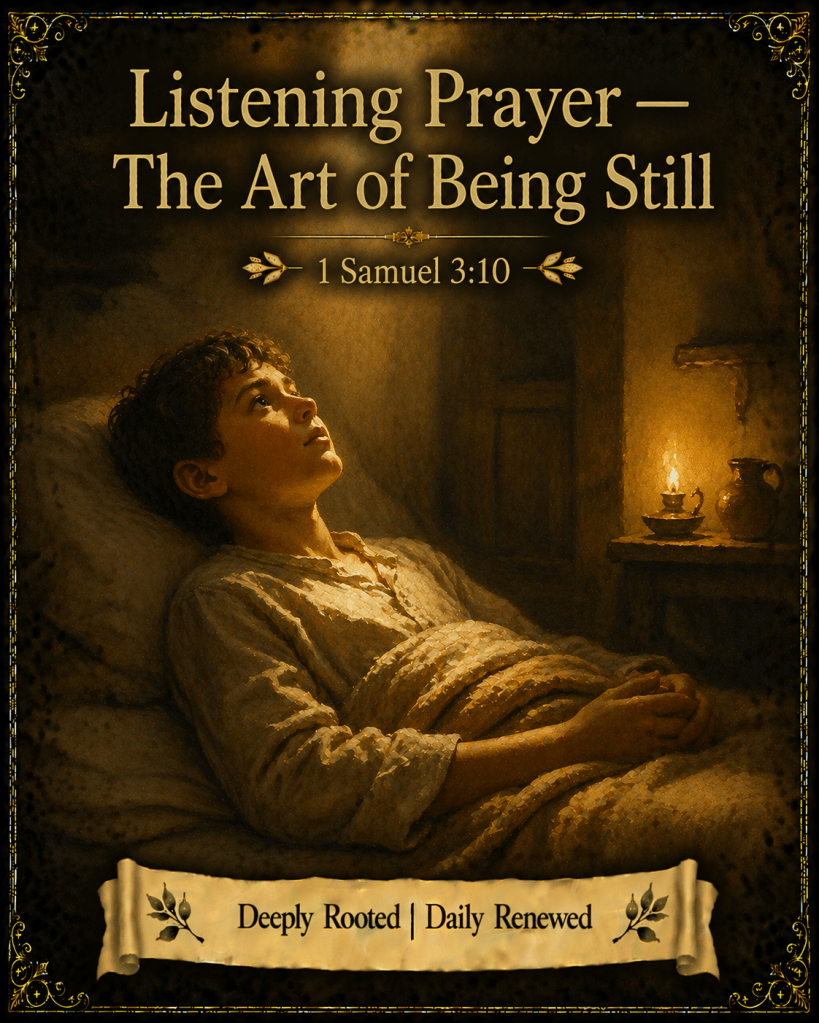
  • Wednesday, May 13, 2026–The Prayers Of Jesus: The Prayer For Unity—That They May Be One

    KEY VERSE

    “I pray also for those who will believe in me through their message, that all of them may be one, Father, just as you are in me and I am in you.”

    — John 17:20–21


    ROOTED TRUTH

    On the night before He died, Jesus prayed for you. Not for your comfort — for your unity with Him and with one another.


    FAITH STORY

    John 17 is the longest recorded prayer of Jesus in the Gospels. He prayed it the night before His crucifixion — after the Last Supper, before Gethsemane, in the final hours before everything changed.

    And in this prayer, He prayed for you.

    Not just for the eleven in the room. Verses 20 and 21 reach forward across twenty centuries and include everyone who would ever believe through the message of those disciples. That includes you. Jesus, on the night He was betrayed, spent some of His last free hours interceding for your faith.

    What did He pray for? Not your comfort, not your success, not even your safety. He prayed for your unity. That all of them may be one, Father, just as you are in me and I am in you.

    He prayed for unity with God — that believers would share in the same intimacy He shared with the Father. And He prayed for unity with one another — that the watching world would see something in the church that they could not explain apart from God.

    The standard He set is breathtaking: unity like the Trinity. Not just tolerance, not just coexistence, but the kind of deep, selfless, other-centered love that exists between the Father and the Son.

    And the purpose is equally breathtaking: so that the world may believe. Our unity is not just about our comfort. It is one of God’s primary strategies for reaching the people who don’t yet know Him.

    Jesus prayed this for you. Live like He meant it.


    SCRIPTURE FOR DEEPER ROOTS

    John 17:1–26 — The full High Priestly Prayer of Jesus.

    Ephesians 4:3 — “Make every effort to keep the unity of the Spirit through the bond of peace.”

    1 Corinthians 1:10 — “I appeal to you, brothers and sisters, that all of you agree with one another.”


    DAILY PRACTICE

    Jesus prayed for unity in the body of Christ. Is there a broken or strained relationship in your church community, family, or circle of believers? Spend time today praying specifically for that relationship — for unity, for understanding, for the kind of love that chooses the other person. Then take one small, concrete step toward reconciliation or connection.


    DAILY PRAYER

    Father, Jesus prayed for my unity with You and with others — on the night before He died. I don’t want to take that lightly. Show me where division has crept into my relationships with other believers. Give me the humility to pursue unity even when it’s costly. Let my life — and the life of the church — be the kind of witness that makes the world ask questions only You can answer. Amen.


    DEEP REFLECTION

    1.  Jesus prayed for unity as one of His final acts before the cross. What does the priority He placed on unity say about how seriously we should take division in the body of Christ?

    2.  The unity Jesus prayed for is modeled on the unity of the Trinity — not just agreement, but deep, self-giving love. How does that standard challenge the way you relate to other believers who are different from you?

    3.  Jesus said unity in the church is a witness to the world. Can you think of a time when you saw genuine Christian unity draw someone closer to faith? What made it so powerful?


    #DeeplyRooted#DailyRenewed Devotions for a Grounded and Growing Faith

  • Tuesday, May 12, 2026–The Prayers Of Jesus: The Prayer Of Surrender—Not My Will

    KEY VERSE

    “Yet not as I will, but as you will.”

    — Matthew 26:39


    ROOTED TRUTH

    The most costly prayer in history was prayed in a garden — and it was only four words long: not my will, Yours.


    FAITH STORY

    Gethsemane was not a moment of doubt. It was a moment of complete, unflinching humanity.

    Jesus knew what was coming. The betrayal, the arrest, the torture, the cross. And in the garden, the night before it all, He fell on His face and prayed the most honest prayer ever recorded: “My Father, if it is possible, may this cup be taken from me.”

    He did not pretend. He did not perform spiritual strength He wasn’t feeling. He brought His full humanity to the Father — the grief, the dread, the desire for another way. And then, in the same breath, He surrendered: “Yet not as I will, but as you will.”

    This is the prayer that changed everything. Not the miracles, not the sermons, not the Palm Sunday parade. This quiet prayer in a dark garden — where the Son of God chose the Father’s will over His own comfort, His own relief, His own survival — this is what made the cross possible.

    Surrender is not the absence of feeling. Jesus felt everything. Surrender is the choice to trust the Father’s wisdom above your own instinct for self-preservation.

    You will face your own Gethsemane moments. Situations where the cup in front of you is not the one you would have chosen. Paths that cost more than you expected. Prayers that go, please let there be another way.

    Jesus shows us that those prayers are not faithless. They are honest. And the faithfulness is not in the absence of the request — it is in the surrender that follows. Not my will. Yours.

    That prayer, in your darkest garden, is one of the most powerful things you will ever pray.


    SCRIPTURE FOR DEEPER ROOTS

    Matthew 26:36–44 — Jesus prays in Gethsemane.

    Romans 8:26 — “The Spirit himself intercedes for us through wordless groans.”

    Philippians 2:8 — “He humbled himself by becoming obedient to death — even death on a cross.”


    DAILY PRACTICE

    Identify one situation in your life right now where you are struggling to surrender your will to God’s. Write out your honest prayer first — the full, unfiltered version of what you want. Then, beneath it, write: “Yet not my will, but Yours.” Pray both parts. The honesty and the surrender together — that is Gethsemane prayer.


    DAILY PRAYER

    Father, there are things I am carrying right now that I would choose differently if the choice were mine. I bring You my honest heart — the fear, the preference, the desire for a different path. And then I follow Jesus into the hardest prayer: not my will, but Yours. I trust that Your plan, even when it costs me, is better than my comfort. Hold me in this surrender. Amen.


    DEEP REFLECTION

    1.  Jesus expressed His honest desire — “let this cup pass” — before surrendering. What does that tell you about whether God can handle your raw, unfiltered prayers?

    2.  What is the difference between surrendering your will to God and simply resigning yourself to a bad outcome? How do you tell them apart in your own heart?

    3.  Is there a cup in front of you right now that you have been reluctant to surrender? What would it mean for you — practically and spiritually — to pray “not my will, but Yours” over it today?


    #DeeplyRooted #DailyRenewed Devotions for a Grounded and Growing Faith

  • Monday, May 11, 2026–The Prayers Of Jesus: The Lord’s Prayer—A Blueprint For Connection

    KEY VERSE

    “Our Father in heaven, hallowed be your name, your kingdom come, your will be done, on earth as it is in heaven.”

    — Matthew 6:9–10


    ROOTED TRUTH

    The Lord’s Prayer is not a script to recite. It is a map of the soul’s journey toward God — from worship, to surrender, to need, to forgiveness, to trust.


    FAITH STORY

    Jesus gave His disciples a prayer — but He gave it as a pattern, not a password.

    “Pray like this,” He said. Not “pray these words” as a formula to unlock heaven’s door. But here is the shape, the movement, the heart posture of prayer that connects you to the Father.

    It begins where all true prayer must begin: with God. Our Father in heaven, hallowed be Your name. Before any request is made, before any need is voiced, the soul orients itself toward who God is. Holy. Worthy. Above. And yet — Father. Personal. Near. The tension between His transcendence and His intimacy is held together in the very first line.

    Then comes surrender: Your kingdom come, Your will be done. Not mine. Yours. This is not passive resignation — it is the most active thing a person can do. To lay down your agenda and take up His. To say, I trust Your plan more than I trust my own preferences.

    Then — and only then — the requests come. Daily bread. Forgiveness. Deliverance. The needs are real and God invites us to bring them. But they come after worship and surrender, not before. The order matters.

    The prayer ends where it began — with God. For Yours is the kingdom, the power, and the glory. The bookends of this prayer are both about Him. Our needs live in the middle, held safely between two declarations of who He is.

    This is the shape of a healthy prayer life. It doesn’t begin with your problems. It begins with His presence — and everything else finds its right place from there.


    SCRIPTURE FOR DEEPER ROOTS

    Matthew 6:9–13 — The Lord’s Prayer in full.

    Luke 18:1 — “Then Jesus told his disciples a parable to show them that they should always pray and not give up.”

    1 John 5:14 — “This is the confidence we have in approaching God: that if we ask anything according to his will, he hears us.”


    DAILY PRACTICE

    Pray through the Lord’s Prayer slowly today — one phrase at a time. After each phrase, pause and make it personal. “Our Father in heaven” — speak to Him as your Father. “Your will be done” — name one specific area where you are surrendering your will to His today. Let the structure guide you into depth rather than speed.


    DAILY PRAYER

    Our Father in heaven, holy is Your name. I come to You today not with my agenda first, but with Yours. Your kingdom come — in my home, my relationships, my decisions today. Your will be done — even where it costs me something. Give me what I need for today. Forgive me as I choose to forgive others. Lead me away from what would harm me. For You are the King, the power, and the glory — forever. Amen.


    DEEP REFLECTION

    1.  The Lord’s Prayer begins with God — His name, His kingdom, His will — before a single personal need is mentioned. How does the order of this prayer challenge or reshape the way you typically approach God?

    2.  “Your will be done” sits at the center of the prayer. What is the one area of your life where praying that phrase is most difficult right now — and what does that difficulty reveal?

    3.  The prayer asks for “daily bread” — provision for today, not for the year. What would it do to your anxiety levels if you truly practiced asking God for today’s needs rather than trying to secure tomorrow on your own?


    #DeeplyRooted#DailyRenewed Devotions for a Grounded and Growing Faith

  • Sunday, May 10, 2026–The Prayers Of Jesus: Jesus, The Man Who Prayed

    KEY VERSE

    “Lord, teach us to pray, just as John taught his disciples.”

    — Luke 11:1


    ROOTED TRUTH

    Jesus didn’t just teach about prayer. He showed us what it looks like when someone is so connected to the Father that conversation with Him is as natural as breathing.


    FAITH STORY

    Of all the things the disciples could have asked Jesus to teach them, they asked Him to teach them to pray.

    They had watched Him preach to thousands, heal the sick, calm storms, and raise the dead. They had seen the miracles. And yet what stopped them in their tracks — what made them lean in and say, teach us — was watching Him pray.

    There was something about the way Jesus prayed that was unlike anything they had ever witnessed. It wasn’t performance. It wasn’t religious ritual. It was intimacy. It was a Son talking to His Father. And they wanted what He had.

    The Gospels are full of moments when Jesus slipped away to pray. Before choosing the twelve disciples, He prayed all night. Before feeding five thousand, He gave thanks. In the garden of Gethsemane, He prayed until His sweat was like drops of blood. On the cross, He prayed for the people killing Him. And His last recorded words before death were a prayer.

    Prayer was not something Jesus did alongside His ministry. It was the source of it. Everything He said, every miracle He performed, every decision He made — it all flowed out of a life saturated in communion with the Father.

    This week we are going to study the actual prayers of Jesus — what He prayed, how He prayed, and what His prayers reveal about how we can pray. Not as a method to master, but as a relationship to enter.

    The disciples asked the right question. So can we. Lord, teach us to pray.


    SCRIPTURE FOR DEEPER ROOTS

    Luke 5:16 — “Jesus often withdrew to lonely places and prayed.”

    Mark 1:35 — “Very early in the morning, while it was still dark, Jesus got up, left the house and went off to a solitary place, where he prayed.”

    Hebrews 7:25 — “He always lives to intercede for them.”


    DAILY PRACTICE

    This week, before you read each devotional, spend two minutes in silence — simply positioning yourself to listen before you speak. Ask God the same question the disciples asked: “Lord, teach me to pray.” Come as a student, not an expert, and watch what He does with that posture.


    DAILY PRAYER

    Lord, I come to You the way Your disciples did — not with answers, but with a request. Teach me to pray. Not just the words or the format, but the heart behind it. I want the kind of prayer life that flows from real relationship — the kind that shaped everything You did. Open that to me this week. Amen.


    DEEP REFLECTION

    1.  What is it about the way Jesus prayed that caused His disciples to stop and ask to be taught? What does that tell you about the difference between religious prayer and relational prayer?

    2.  Luke 5:16 says Jesus often withdrew to pray — even in the middle of busy, fruitful ministry. What does His example say about the relationship between prayer and effectiveness?

    3.  If someone watched your prayer life the way the disciples watched Jesus, what do you think they would ask you to teach them — and what might that reveal about where your prayer life is right now?


    #DeeplyRooted#DailyRenewed Devotions for a Grounded and Growing Faith
  • Saturday, May 9, 2026–The Names Of God: Emmanuel-God With Us

    KEY VERSE

    “The virgin will conceive and give birth to a son, and they will call him Immanuel, which means ‘God with us.’”

    — Matthew 1:23


    ROOTED TRUTH

    Every name of God this week points to what He does. Emmanuel reveals who He chose to become — one of us, so He could be with us forever.


    FAITH STORY

    Every name we have studied this week tells us something God does. He provides. He heals. He gives peace. He shepherds. He is almighty.

    But Emmanuel — God with us — tells us something different. It tells us what God became.

    The incarnation is the hinge of all history. The God who spoke the universe into existence, who parted the Red Sea, who rained bread from heaven, chose to enter His creation as a baby. Vulnerable. Dependent. Human. Not visiting from a distance. Not sending a representative. Coming Himself.

    Why? Because proximity matters. Because presence changes everything. Because there are things only a God who has walked in human skin can fully understand — the weight of grief, the ache of loneliness, the exhaustion of a long day, the sting of betrayal.

    Jesus is not a God who watches your suffering from a safe distance and offers sympathy. He is Emmanuel — the God who came close enough to suffer alongside you. Who wept at a grave. Who said “I am thirsty” from a cross. Who, in His resurrection, did not abandon His humanity but carried it into eternity.

    And here is the promise that closes the entire story: “I am with you always, to the very end of the age” (Matthew 28:20). Emmanuel is not just a Christmas name. It is the permanent posture of God toward His people. He is with you — right now, in this moment, in this season, in this struggle.

    You have never faced a single moment alone. And you never will.


    SCRIPTURE FOR DEEPER ROOTS

    John 1:14 — “The Word became flesh and made his dwelling among us.”

    Hebrews 4:15 — “We do not have a high priest who is unable to empathize with our weaknesses.”

    Matthew 28:20 — “And surely I am with you always, to the very end of the age.”


    DAILY PRACTICE

    As you close this week, sit quietly for ten minutes in the awareness that Emmanuel — God with you — is present right now. No agenda. No asking. Just practice being aware of His presence. Then write a short letter to God reflecting on what knowing His names has meant to you this week and which name has most changed how you see Him.


    DAILY PRAYER

    Emmanuel, God with me — thank You for not staying distant. Thank You for coming close. Thank You for taking on flesh, for walking in my world, for weeping real tears and feeling real pain. You are not a God I have to reach up to find. You have already come down. Be near to me today — in the ordinary moments, the hard ones, and the quiet ones. I am never alone because You are always with me. Amen.


    DEEP REFLECTION

    1.  Every other name of God this week describes what He does. Emmanuel describes what He chose to become. Why does that distinction matter to you personally?

    2.  Hebrews 4:15 says Jesus is able to empathize with our weaknesses because He experienced them. In what current struggle does it most comfort you to know that Jesus truly understands from the inside?

    3.  Looking back over the whole week — Jehovah Jireh, Jehovah Rapha, Jehovah Shalom, Jehovah Rohi, El Shaddai, Emmanuel — which name has most deeply touched something in you? How will you carry that name forward into next week?


    #DeeplyRooted #DailyRenewed Devotions for a Grounded and Growing Faith

  • Friday, May 8, 2026–The Names Of God: El Shaddai-God Almighty

    KEY VERSE

    “When Abram was ninety-nine years old, the LORD appeared to him and said, ‘I am God Almighty; walk before me faithfully and be blameless.’”

    — Genesis 17:1


    ROOTED TRUTH

    El Shaddai is the God for whom nothing is too hard, no situation too far gone, and no promise too impossible to keep.


    FAITH STORY

    Abram was ninety-nine years old. Sarai was ninety. And God showed up to talk about having children.

    From every human vantage point, the conversation was absurd. The window had closed decades ago. The biology was done. The dream had been deferred so long it had turned to dust. And yet God opened the conversation by introducing Himself: I am El Shaddai — God Almighty.

    The name carries the weight of sufficiency and omnipotence. Some scholars connect it to the Hebrew word for mountain — immovable, unshakeable. Others connect it to the word for breast — the one who nourishes, sustains, and is more than enough. Either way, the meaning is the same: I am the God for whom nothing is too hard.

    God did not say, “I know this looks impossible, but try to believe.” He said, “Let me tell you who I am first.” Because the ability to trust an impossible promise depends entirely on how big you believe the One making it to be.

    A year later, Isaac was born. Laughter — that is what his name means. Because Sarah laughed when she heard the promise, and God kept it anyway. The impossible became the testimony.

    What has been deferred so long in your life that you have stopped expecting it? What situation has you convinced that it is simply too far gone? El Shaddai has not changed. He is still the God Almighty — the God of the impossible promise, the God of the too-late moment, the God who shows up when every human option has expired.

    He is more than enough for what you are facing. He always has been.


    SCRIPTURE FOR DEEPER ROOTS

    Genesis 18:14 — “Is anything too hard for the LORD?”

    Jeremiah 32:27 — “I am the LORD, the God of all mankind. Is anything too hard for me?”

    Luke 1:37 — “For no word from God will ever fail.”


    DAILY PRACTICE

    Write down one situation in your life that feels humanly impossible — something you may have quietly stopped praying about because it seemed too far gone. Pray over it today using the name El Shaddai. Declare that the God Almighty is bigger than this circumstance, and ask Him to reawaken your faith for the impossible.


    DAILY PRAYER

    El Shaddai, You are God Almighty — and nothing is too hard for You. I confess that I have sometimes limited You by the size of my faith or the logic of my circumstances. Today I bring You what feels impossible. You kept Your promise to Abraham when it made no sense. I trust You to keep Your promises to me. Reawaken my faith. Let me laugh with joy at what You are about to do. Amen.


    DEEP REFLECTION

    1.  God introduced Himself as El Shaddai before making an impossible promise. Why does knowing who God is matter before we can receive what He says?

    2.  Is there a prayer you have quietly stopped praying because it seemed too impossible or too late? What would it look like to bring it back to El Shaddai today?

    3.  Sarah laughed in disbelief — and God kept the promise anyway. What does that tell you about the relationship between our doubt and God’s faithfulness?


    #DeeplyRooted #DailyRenewed Devotions for a Grounded and Growing Faith