KEY VERSE
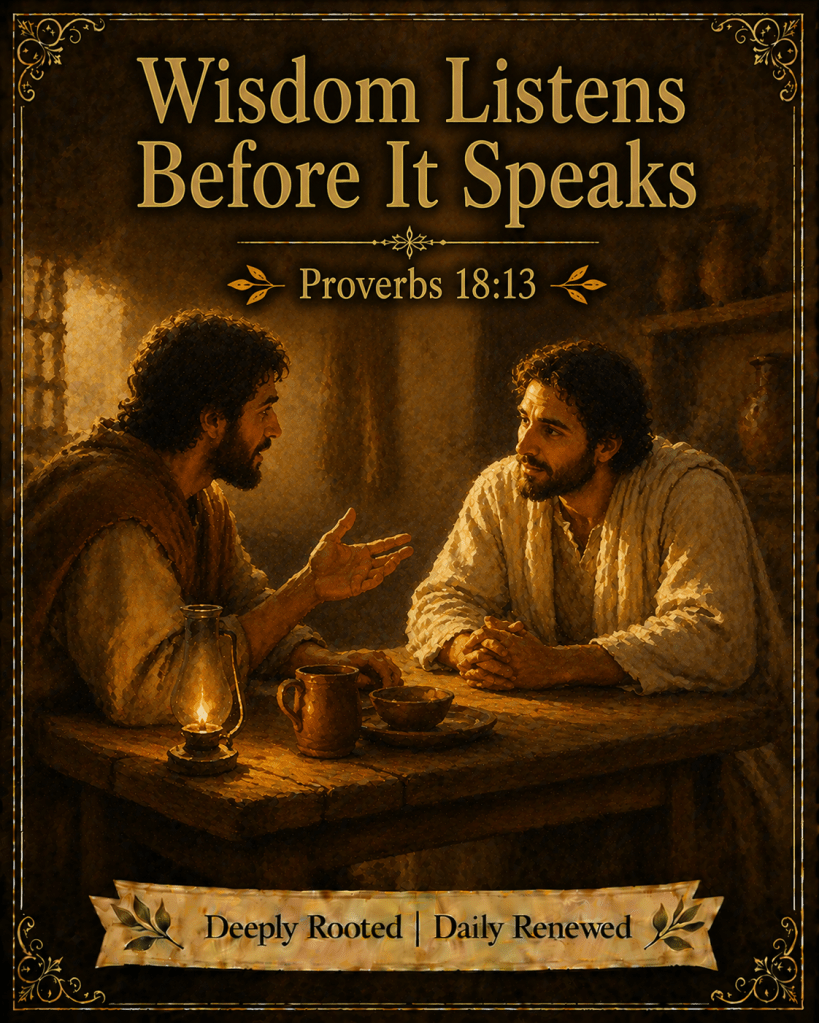
“To answer before listening — that is folly and shame.”
— Proverbs 18:13
ROOTED TRUTH
Wise people are not distinguished by how much they say. They are distinguished by how carefully they listen before they say it.
FAITH STORY
Proverbs has a great deal to say about the tongue — and almost all of it points in the same direction: slow down.
Even fools are thought wise if they keep silent, and discerning if they hold their tongues (Proverbs 17:28). The one who has knowledge uses words with restraint (Proverbs 17:27). To answer before listening is folly and shame. The pattern is consistent: wisdom is marked not by the volume of its words but by the quality of its listening.
This cuts against every instinct of a culture that rewards the loudest voice, the quickest take, the most confident opinion delivered fastest. We have been trained to speak — in meetings, in arguments, on social media — before we have fully understood what we are responding to.
But wisdom operates differently. It listens to understand, not just to respond. It asks questions before it offers answers. It sits with complexity long enough to see it clearly rather than flattening it into a quick conclusion.
James — who drew deeply from the wisdom tradition of Proverbs — said it plainly: everyone should be quick to listen, slow to speak, and slow to become angry (James 1:19). Three beats. Quick to listen. Slow to speak. Slow to anger. In that order, for a reason.
The listening comes first because understanding must precede response. The slowness to speak creates the space for that understanding to form. And the slowness to anger is the fruit of both — because most anger is the product of responding before understanding.
Think about the conversations you most regret. How many of them involved speaking before fully listening? And think about the people in your life whose wisdom you most trust. How carefully do they listen before they speak?
Today, in every conversation, try listening first. Not planning your response while the other person talks — actually listening. Wisdom almost always lives on the other side of that practice.
SCRIPTURE FOR DEEPER ROOTS
James 1:19 — “Everyone should be quick to listen, slow to speak and slow to become angry.”
Proverbs 17:27–28 — “The one who has knowledge uses words with restraint…even fools are thought wise if they keep silent.”
Ecclesiastes 5:2 — “Do not be quick with your mouth…let your words be few.”
DAILY PRACTICE
Choose one conversation today — with a family member, a coworker, a friend — and practice intentional listening. Before you respond to anything they say, ask one clarifying question: what do you mean by that, or can you tell me more? Resist the urge to offer your opinion, your solution, or your story until they feel fully heard. Notice what changes in the conversation — and in you.
DAILY PRAYER
Father, I talk too much and listen too little. I respond before I understand. I offer solutions before I’ve heard the problem. I speak when I should sit with silence. Slow me down. Teach me the wisdom that lives in listening — that asks before it answers, that understands before it responds. Let my words be fewer and weightier. Amen.
DEEP REFLECTION
1. Think of someone in your life who is a genuinely wise listener. What do they do differently in conversation — and what effect does it have on the people around them?
2. James 1:19 puts listening before speaking before managing anger — in that specific order. Why does the sequence matter? What happens when the order is reversed?
3. Where in your life — a specific relationship or context — do you most struggle to listen before speaking? What drives the impulse to speak first, and what would change if you didn’t?
#DeeplyRooted#DailyRenewed Devotions for a Grounded and Growing Faith
 Deeply Rooted Daily Renewed
Leave a comment